
The Definitive Guide to the Moldova National Wine Festival: October 2026
A Complete Traveler’s Handbook to the 25th Anniversary Celebration in Chișinău — Dates, Tastings, Cellars, Culture, and Everything In Between
Introduction: Why Moldova, Why Now
There is a small country wedged between Romania and Ukraine that produces wine with a history stretching back more than 5,000 years, holds the Guinness World Record for the largest wine cellar on Earth, and exports roughly 90% of its wine to over 70 countries — yet remains one of Europe’s least-visited destinations. That country is Moldova, and if you are a wine lover seeking authenticity over polish, intimacy over crowds, and wines that taste like nowhere else on the continent, October 2026 is the moment to go.
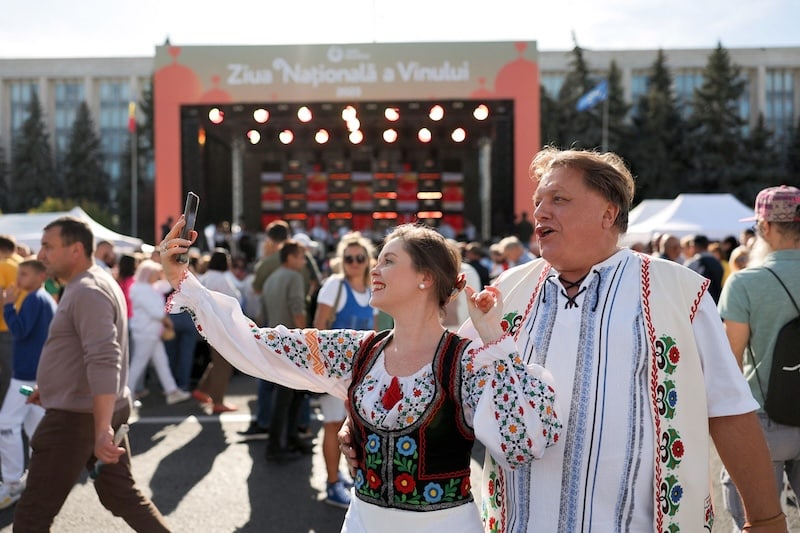
The 25th edition of Moldova’s National Wine Day will take place on October 3–4, 2026, in Chișinău’s Great National Assembly Square (PMAN) . This is not merely another wine festival. It is a quarter-century milestone for an event that began in 2002 as a domestic celebration and has evolved into one of Eastern Europe’s largest wine-focused gatherings, drawing more than 100 wineries and thousands of international visitors . The 2026 edition carries the slogan “United by Wine” — a phrase that captures both the communal spirit of Moldovan winemaking and the country’s ambition to claim its place on the global wine tourism map .
This guide is designed to be your single resource for planning the trip. It covers the festival itself, the wines you must taste, the cellars you must descend into, the regions worth exploring beyond the capital, and the practical details — from visa rules to tasting protocols — that will make your visit seamless.
Part One: The Festival at a Glance
Dates, Location, and Atmosphere
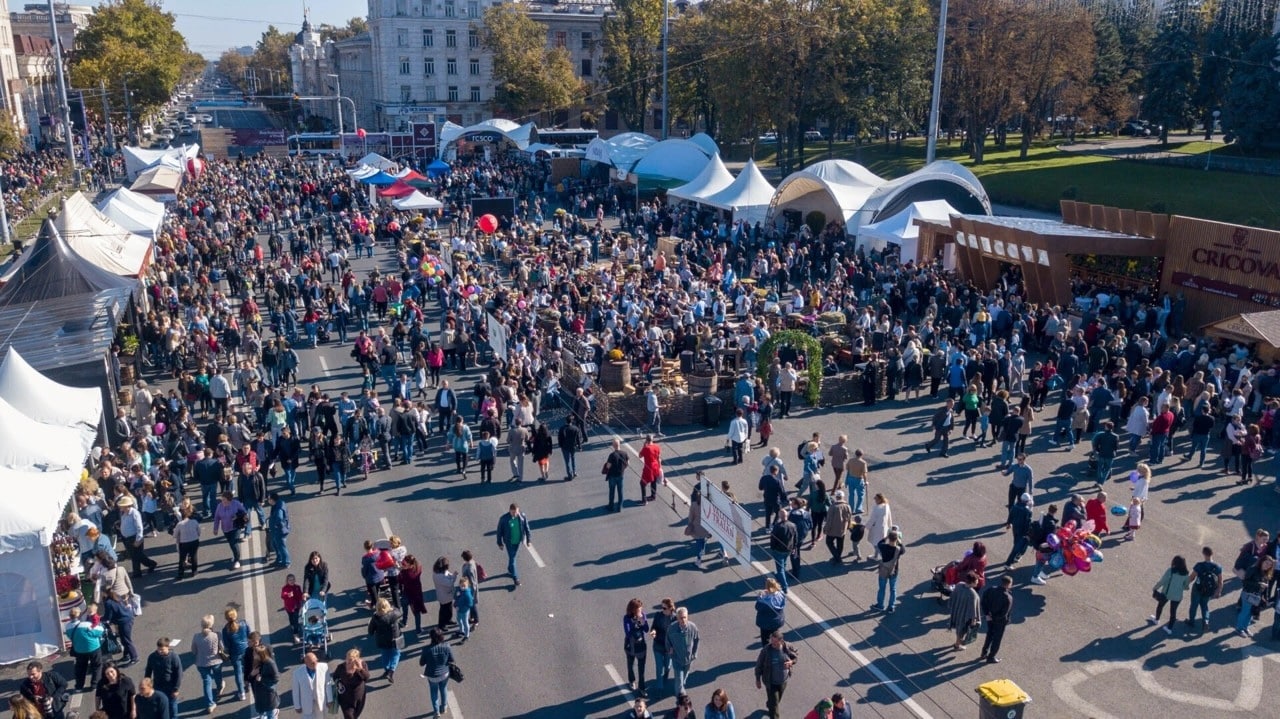
National Wine Day 2026 runs for two full days, Saturday, October 3 and Sunday, October 4, in the heart of Chișinău. The Great National Assembly Square, normally a vast open plaza anchored by government buildings, transforms into an open-air cellar without walls. Wineries from every corner of the country set up stalls, pour freely, and tell the stories behind their bottles .
The timing is deliberate. Early October falls at the tail end of the grape harvest, when the vineyards are still heavy with fruit and the first wines of the year are beginning to take shape. The weather in Chișinău during this window is typically mild and dry — ideal for wandering from stall to stall with a glass in hand.
The festival is organized by Moldova’s National Vine and Wine Office in partnership with the Ministry of Agriculture and the Ministry of Culture. What began as a modest national holiday has become a strategic industry platform, with the event serving simultaneously as a consumer festival, a trade showcase, and a statement of national identity .
The Taster’s Booklet: Your Passport to the Wines
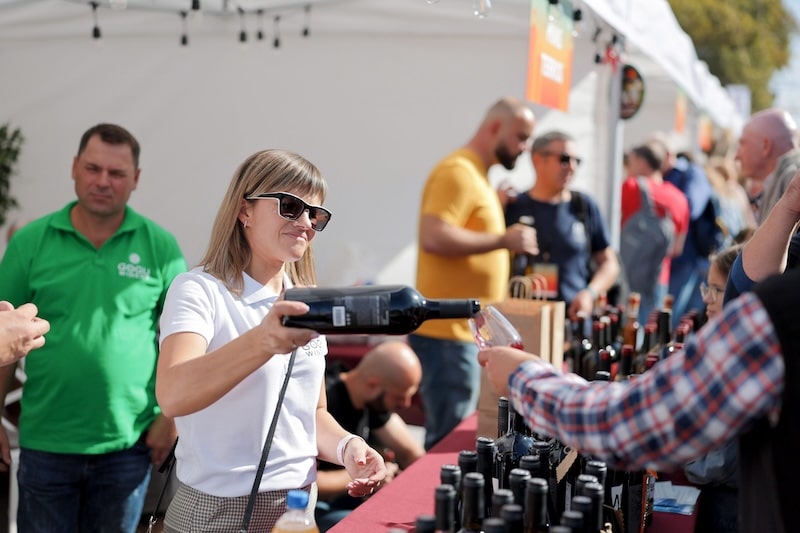
To taste at the festival, you will need a Taster’s Booklet. This is not merely a ticket — it is your structured introduction to Moldovan wine. The booklet typically includes a branded tasting glass, tokens or vouchers for a set number of wine tastings (historically 12 wines plus one favorite wine across the two days), and discounts on promotional merchandise .
In a notable shift toward sustainability, the 2025 edition introduced a fully digital Taster’s Booklet, eliminating paper waste. The 2026 festival is expected to continue this digital-first approach, so anticipate downloading an app or accessing your booklet via smartphone . The glass, however, remains physical and essential — it is your vessel for the weekend.
What to Expect on the Ground
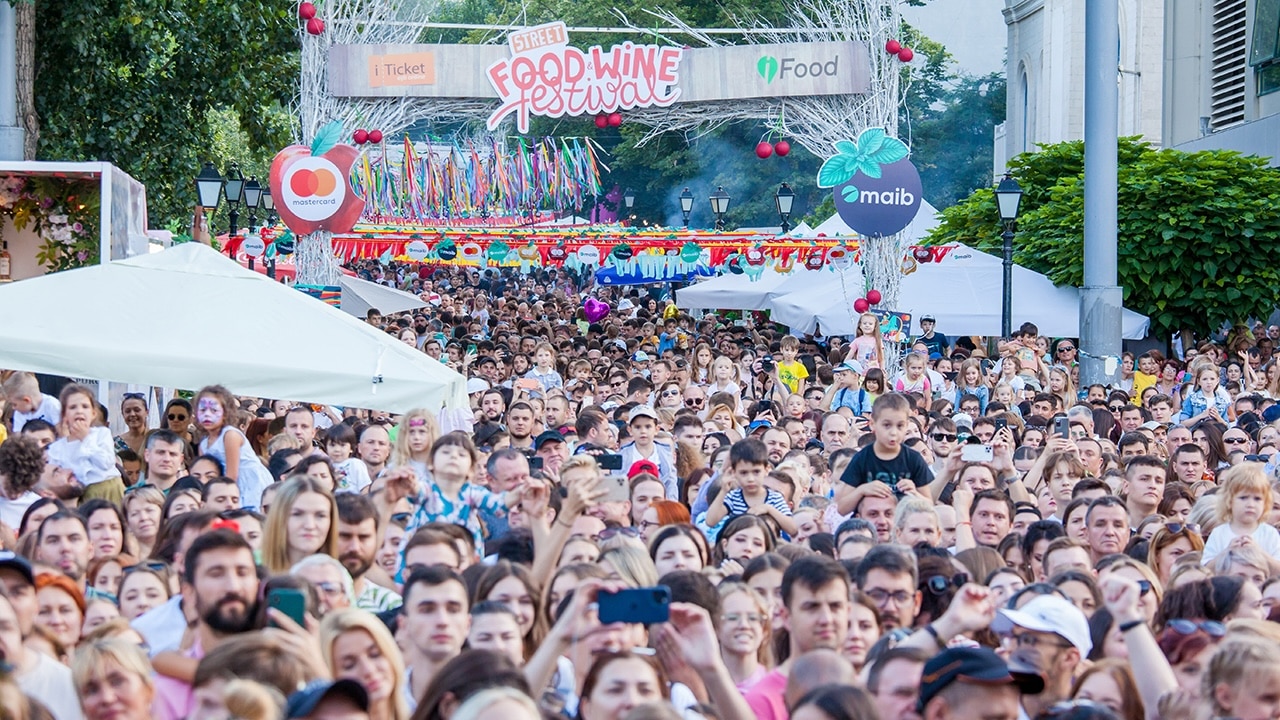
The festival layout is straightforward: rows of winery stalls, each representing a producer from one of Moldova’s wine regions. You will find everything from large, internationally recognized estates like Purcari and Cricova to small family operations producing only a few thousand bottles per year. The atmosphere is convivial, unpretentious, and deeply social. Winemakers themselves are often behind the tables, pouring their own wines and eager to explain what makes them distinctive.
Beyond the wine, the festival features:
-
Traditional Moldovan cuisine: stalls serving mamaliga (polenta), placinte (stuffed pastries), sarmale (cabbage rolls), and grilled meats designed to pair with the wines.
-
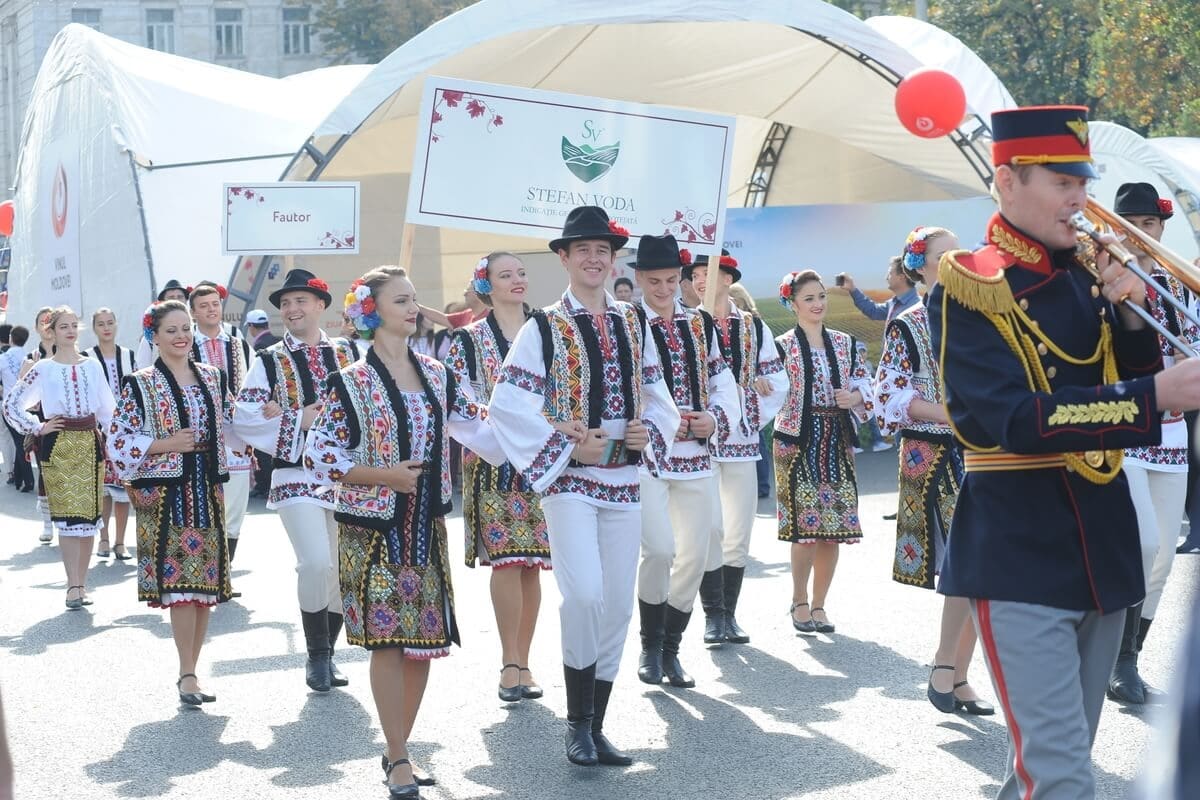
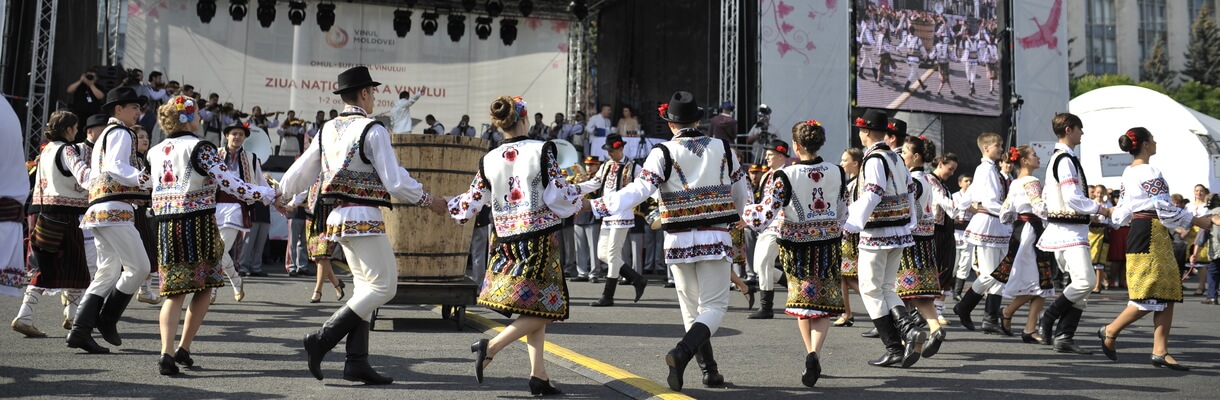
Live cultural performances: folk music and dance ensembles performing throughout both days.
-
Wine School: guided tastings and educational sessions led by sommeliers and winemakers, covering topics from indigenous grape varieties to food pairing .
-
Winery tours and masterclasses: some producers offer deeper experiences beyond the festival grounds, including cellar visits and vineyard walks .
The festival is family-friendly during daylight hours, though the emphasis is squarely on adult enjoyment. Evenings tend toward a more festive, music-driven atmosphere.
The Wine Palette: A New Tradition for 2026
For the 25th anniversary edition, organizers have introduced a creative twist: the “Wine Palette”dress code. Attendees are encouraged to wear tones inspired by Moldovan wines — deep reds, bordeaux, and intense purples — either as full outfits or as accent pieces and accessories . This is optional, but participating adds a layer of collective celebration to the weekend. Think of it as a visual toast to the country’s wine culture.
Part Two: The Wines You Must Taste
Indigenous Grape Varieties: Moldova’s Secret Weapon
Moldova’s wine identity is increasingly built around its indigenous grape varieties — grapes that exist almost nowhere else and produce wines with a sense of place that cannot be replicated. Stefan Iamandi, director of the National Office for Vine and Wine, puts it plainly: “Moldova’s uniqueness also lies in its indigenous grape varieties… which deliver wines with a strong sense of place” .
The four names you need to know are:
Fetească Albă (White Fetească): A floral, citrus-driven white with fresh acidity and a light-to-medium body. It is one of Romania and Moldova’s oldest grape varieties and serves as a benchmark for the region’s white wine identity .
Fetească Regală (Royal Fetească): A natural cross between Fetească Albă and Grasă de Cotnari, producing wines with more aromatic intensity — think white flowers, ripe orchard fruit, and a hint of honey. It is versatile and widely planted .
Fetească Neagră (Black Fetească): The flagship red indigenous variety. Expect approachable tannins, spicy berry flavors, and subtle notes of dried fruit and vanilla. In the warm southern region of Valul lui Traian, it achieves optimal ripeness and produces structured, deeply colored wines .
Rară Neagră (Rare Black): A red variety that thrives in the Ștefan Vodă region, where proximity to the Black Sea and Dniester River moderates temperatures. The wines show a silky texture and a complex, balsamic profile — savory, herbal, and deeply satisfying .
Beyond these historical varieties, Moldova has developed newly-bred grapes through decades of local research. Names like Viorica, Alb de Onițcani, Riton, and Copceac are now winning gold medals at international competitions for their aromatic profiles and resilience . These are not curiosities — they are consumer favorites and represent the future of Moldovan wine.
The Three Wine Regions (Plus Divin)
Moldova’s wine production is organized around three Protected Geographical Indications (PGIs), each with distinct soils, altitudes, and microclimates:
Codru (Central Region): Home to the highest vineyards in the country, reaching up to 320 meters above sea level. The region is defined by massive oak forests that create a cool microclimate and limestone-rich soils that provide the acidity and mineral backbone essential for premium sparkling wines and aromatic whites like Viorica . Cricova and Mileștii Mici, the two most famous underground cellars, are located here.
Ștefan Vodă (South-East): Influenced by the Black Sea and the Dniester River, this region benefits from moderate temperatures and soils enriched with red clay. It is the stronghold of Rară Neagră and home to Château Purcari, Moldova’s most internationally recognized winery .
Valul lui Traian (South): The warmest region, with loamy-sandy soils and Mediterranean influences. This is where Fetească Neagră achieves its fullest expression — structured reds with deep color and velvety tannins .
The fourth GI, Divin, is dedicated to Moldova’s traditional aged wine spirit — a brandy-style drink with its own appellation and production rules. Divin is to Moldova what cognac is to France, and it is worth seeking out at the festival .
Styles to Seek Out
Moldova is not a one-style country. At the festival, prioritize:
-
Sparkling wines: Moldova’s cool Codru region produces high-quality traditional-method sparkling wines that rival far more expensive offerings from Western Europe .
-
Aromatic whites: Fetească Albă, Fetească Regală, and Viorica are consistently excellent.
-
Structured reds: Fetească Neagră and Rară Neagră, particularly from the southern regions, offer quality and aging potential at prices that feel almost unreasonable .
-
Rosé: Moldova produces elegant, crisp rosés that are often overlooked but represent excellent value.
-
Late harvest and dessert wines: Some producers, like Mircești Winery, craft late-harvest wines with indigenous varieties .
Part Three: Beyond the Festival — The Cellars and Wineries
The National Wine Day festival is the centerpiece, but the broader wine tourism infrastructure of Moldova is what makes the trip truly memorable. With more than 100 wineries and some of the most spectacular underground cellars in the world, you would be remiss to visit only the festival grounds.
Mileștii Mici: The World’s Largest Wine Cellar
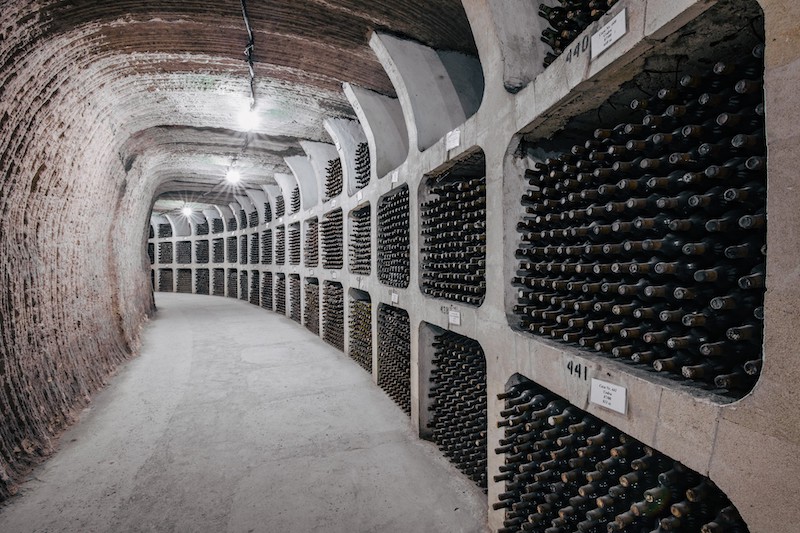
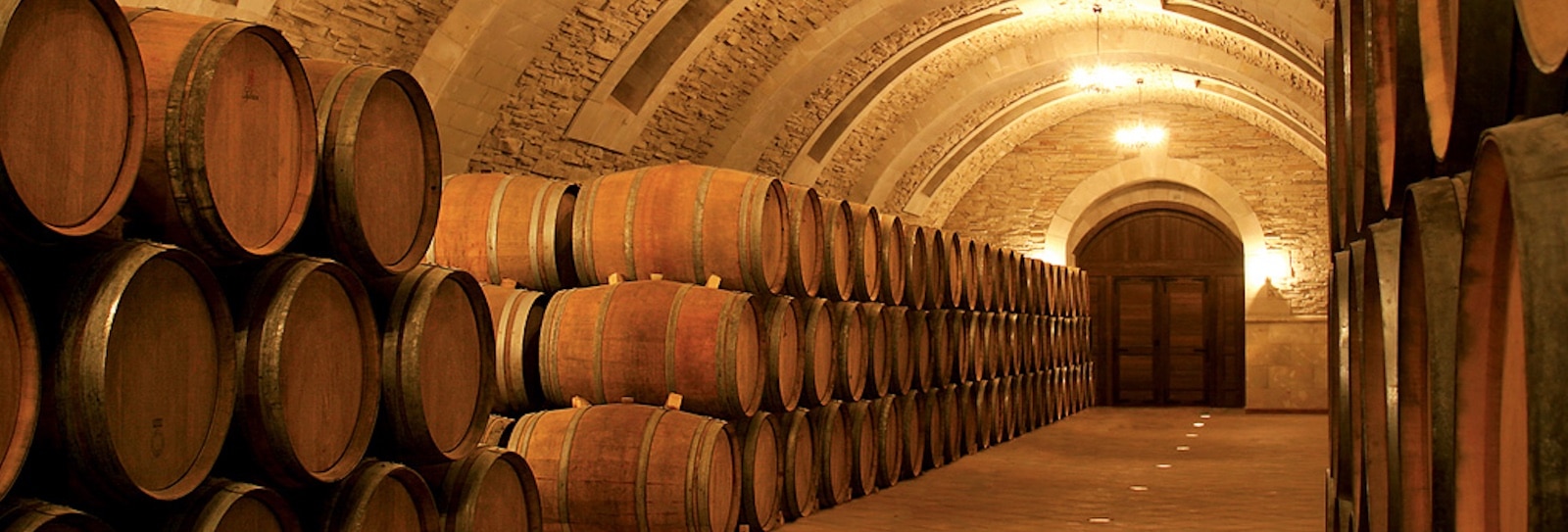
A Guinness World Record holder, Mileștii Mici’s underground network stretches for more than 200 kilometers — though only a fraction is currently in use. Visitors tour the cellars by car or electric cart, driving through underground “streets” lined with hundreds of thousands of bottles. The collection includes wines dating back decades, and the scale is genuinely staggering .
A visit here is not just a tasting; it is a descent into a subterranean city built for wine. Book ahead, especially during the festival weekend.
Cricova: The Underground Wine Galleries
Cricova is Mileștii Mici’s equally famous sibling — another vast underground complex carved from limestone, with galleries wide enough to drive through. The cellars host a collection of rare and aged wines, and tours typically include a tasting in one of the underground chambers. Cricova is particularly known for its sparkling wines, produced using the traditional method .
Château Purcari: Moldova’s Most Celebrated Estate
Founded in 1827 by imperial decree, Purcari is the oldest specialized winery in Bessarabia and remains Moldova’s most internationally awarded producer. Located in the Ștefan Vodă region near the village of Purcari, the estate combines historic architecture with modern winemaking. Its Negru de Purcari and Rosu de Purcari are benchmark wines that have been served to royalty and heads of state .
A visit to Purcari can be combined with a trip to the festival, though it requires a drive of roughly an hour and a half from Chișinău.
Mircești Winery: The “Little Tuscany” of Ungheni
For a different kind of experience, consider Mircești Winery in the Ungheni region. Set among rolling hills and a restored Brâncovenesc-style manor, the estate has been dubbed Moldova’s “Little Tuscany” for its idyllic landscape. The winery cultivates 13 grape varieties, including native ones, and produces the “Bardul din Mircești” range. Visitors can taste, dine at the on-site restaurant, stay in one of 13 guest rooms, and even hike the 80-kilometer trail that links the winery to the Sculeni border crossing .
Mircești represents the newer face of Moldovan wine tourism: small-scale, hospitality-driven, and deeply connected to its community. It is a model of sustainable rural development, supported in part by EU grants .
Other Wineries Worth Exploring
-
Et Cetera Winery: A family-owned estate in the Ștefan Vodă region, founded by the Luchianov brothers, with organic vineyards and a modern approach .
-
Gogu Winery: A family operation in Căușeni producing award-winning wines from local and international varieties .
-
Leuntea-Vin: One of Moldova’s oldest wineries, founded in 1817, with historic cellars and handcrafted wines .
-
Javgur Winery: A family estate founded in 1957, located along the ancient Trajan’s Wall in the Cimișlia district .
Part Four: Practical Planning
Getting There
By air: Chișinău International Airport (KIV) is the main gateway, with connections to major European hubs. From the airport, taxis and ride-hailing apps are readily available.
By land: Moldova shares borders with Romania (to the west) and Ukraine (to the north, east, and south). There are numerous border crossings, including several along the Ukrainian border such as Mohyliv-Podilskyi — Otach (convenient from Vinnytsia and central Ukraine) and Palanka — Mayaky — Udobne (from Odesa). Border wait times can be checked via Moldova’s official “Traffic Online” service .
Visa requirements: Citizens of the EU, USA, Canada, Japan, and many other countries can visit Moldova visa-free for up to 90 days within a 180-day period. Citizens of countries with a visa regime require an invitation or other supporting documents. Check the Moldovan Ministry of Foreign Affairs website for the current list .
Getting Around
Chișinău is a walkable city, and the festival is centralized in PMAN. For winery visits, options include:
-
Organized tours: Many companies offer day trips to Cricova, Mileștii Mici, and Purcari. These are convenient and often include tastings and transportation.
-
Hired drivers: For flexibility, hiring a driver for the day is affordable by Western European standards.
-
Marshrutkas (minibuses): The local shared transport system reaches most towns and wineries, but requires more planning and patience .
-
Car rental: Possible, though driving in Moldova comes with its own set of challenges (road conditions, signage in Romanian).
Where to Stay
Chișinău offers the widest range of accommodation, from hostels to boutique hotels. For a more immersive experience, several wineries offer estate guesthouses — Mircești has 13 comfortable rooms, and others may offer similar arrangements . Staying at a winery means waking up among the vines, which is difficult to put a price on.
Costs
Moldova is affordable by European standards. The average meal in a casual restaurant costs about 150 MDL (roughly $8–9 USD or €7–8), and a hostel or three-star hotel averages around **460 MDL per night** (roughly $26–28 USD or €24–26) . Festival tastings, winery tours, and transport are all reasonably priced. Budget-conscious travelers can have a rich experience without spending heavily.
Safety and Etiquette
Moldova is generally a safe country to visit. Petty crime like pickpocketing can occur in crowded areas, particularly on public transport, so exercise normal vigilance. The Transnistria region — a breakaway territory in eastern Moldova — is outside the Moldovan government’s control and is best avoided at this time .
Moldovans take hospitality seriously. If invited to someone’s home, bring a small gift. Remove your shoes when entering. At meals, toast with “Noroc!” (roughly “cheers”). In Orthodox churches, women should cover their hair and shoulders, and men should remove their hats. Tipping around 10% is appreciated in restaurants and hotels .
Festival Tips
-
Go early on Saturday: The first day tends to be slightly less crowded in the morning. By afternoon, the square fills.
-
Pace yourself: With 100+ wineries pouring, restraint is a strategy. Use the spit buckets (they are there for a reason) and drink water between tastings.
-
Talk to the winemakers: The best conversations happen when you show genuine curiosity. Ask about indigenous varieties, vintage conditions, and family history.
-
Bring cash: While some larger producers may accept cards, cash (Moldovan leu) is king at festival stalls.
-
Book winery visits in advance: If you plan to visit Cricova, Mileștii Mici, or Purcari during festival weekend, reserve your spot well ahead of time. These are popular year-round, and the festival amplifies demand.
Part Five: The Significance of the 25th Anniversary
National Wine Day was established by parliamentary decision on December 26, 1990, and has been celebrated annually since 2002. The 2026 edition marks the 25th time the festival has been held, a milestone that reflects both the resilience of Moldova’s wine industry and the country’s growing confidence on the international stage .
The wine sector contributes approximately 3% of Moldova’s GDP and nearly 8% of total exports. Moldovan wines have earned more than 8,500 medals at international competitions, and the country ranks among the world’s top 20 wine-exporting nations . These are not the statistics of a hobbyist wine country. Moldova is a serious producer, and National Wine Day is its annual declaration of intent.
The 2026 festival theme, “United by Wine,” speaks to something deeper than marketing. In a country that has faced economic challenges, geopolitical pressures, and the ongoing impact of the war in neighboring Ukraine, wine remains a source of national pride and a shared cultural language. The festival is a moment when the country comes together — winemakers, families, visitors — around a table that has been set for 5,000 years.
For international visitors, this is the appeal. Moldova is not trying to be the next Tuscany or Bordeaux. It is offering something rarer: an authentic, unpolished, deeply human wine experience in Moldova a country where wine is not a luxury product but a way of life. The 25th anniversary edition is your invitation to be part of it.
Conclusion: Why October 2026 Is the Time
The definitive guide to the Moldova National Wine Festival cannot end with logistics alone. It must end with a reason to go. And the reason is this: Moldova is at an inflection point. Its wines are winning international recognition. Its tourism infrastructure is developing rapidly. Its indigenous grape varieties are finding new audiences. But it remains, for now, a destination where you can stand in a square in the capital, glass in hand, and talk to the person who made the wine — not a brand ambassador, not a sales representative, but the winemaker themselves.
October 3–4, 2026, is the 25th National Wine Day. The square will be full, the cellars will be open, and the wines of Fetească, Rară Neagră, and Viorica will be pouring. If you have ever wanted to taste a country’s soul through its wine, this is the weekend to do it. Noroc.
Book your wine tasting tours in Moldova today with Moldova tours.

Bryn Jacobs Chief Editor
Hello dear Travelers! I am Bryn Jacobs and I am your travel advisor. Having a vast experience in traveling throughout Eastern Europe and having researched this part of the world myself. I write articles on the site about travel experiences in Eastern Europe with statistics and interesting facts.