A Day Trip to Soroca Fortress: What to Expect, What You’ll See, and Why a Guide Changes Everything
A day trip from Chișinău to Soroca Fortress is not simply a visit to a medieval castle—it is a 300-kilometer round journey into northern Moldova’s layered history, Roma culture, and river-border geography, and the difference between doing it independently and doing it with a guide is the difference between seeing a stone circle and understanding why that stone circle matters.Soroca sits on the Dniester River, which forms Moldova’s border with Ukraine, and the town contains three distinct attractions that are rarely found in such close proximity: a remarkably well-preserved 16th-century fortress, a monumental candle-shaped memorial on a cliff, and Gypsy Hill, where wealthy Roma families have built mansion-sized homes that have become a sight in themselves . Guided tours from Chișinău typically last 8 to 9 hours, include hotel pickup, and bundle all three sites with a local guide’s narration, entrance tickets, and often a brewery stop on the return leg . The logistics of independent travel to Soroca are manageable but consume time and attention; the value of a guide lies in what happens between the sites—the stories, context, and cultural framing that transform a collection of buildings into a coherent day.

The Fortress: A Perfect Stone Circle on the Dniester
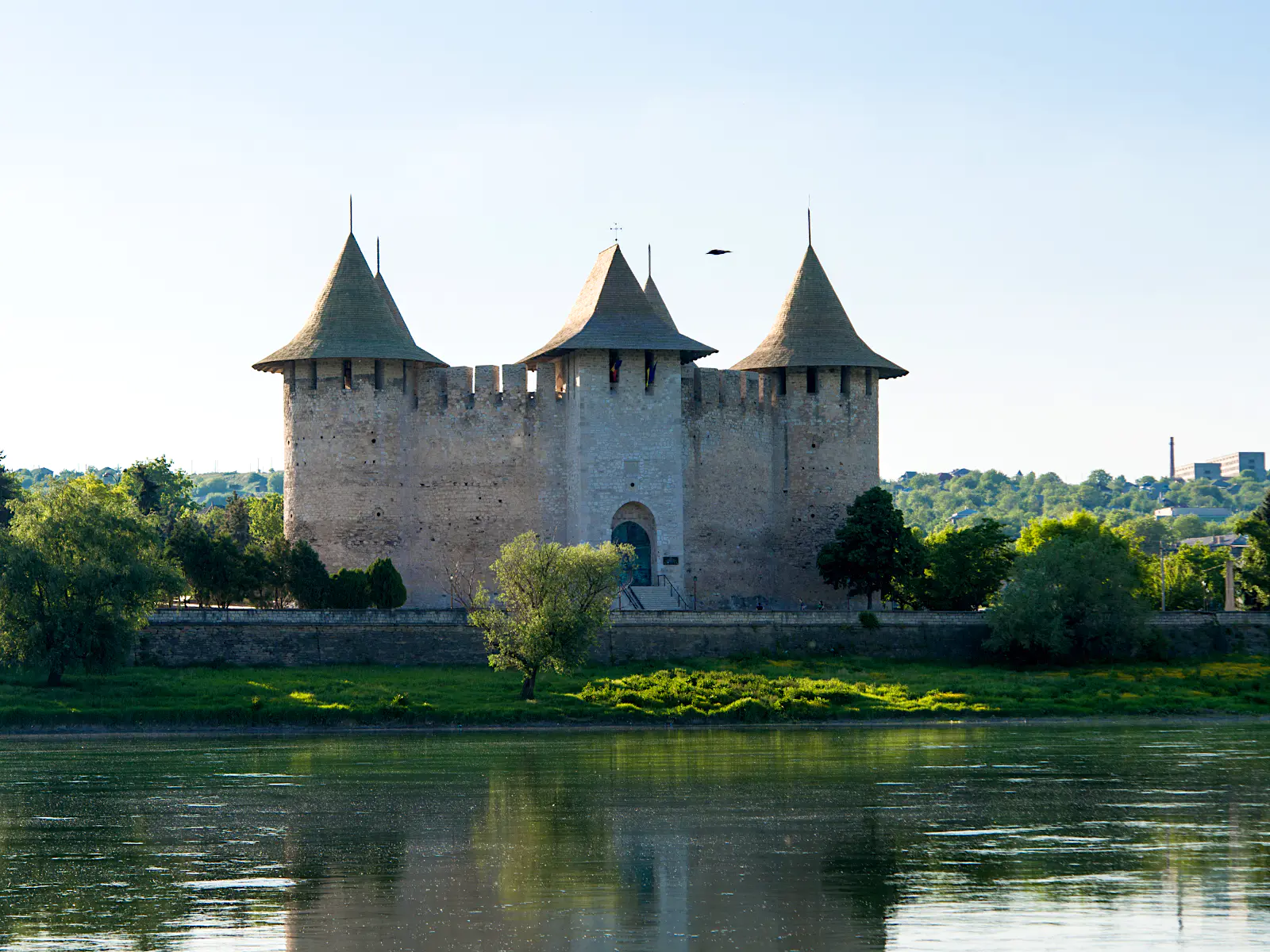
Soroca Fortress is the anchor of the trip and the reason most people make the journey. The first fortification on the site was a wooden structure built by Ștefan cel Mare in 1499; his son Petru Rareș rebuilt it in stone between 1543 and 1546, and it is this circular fortress that survives today . The design is unusual: a perfect stone circle with five towers, walls several meters thick, and a courtyard inside, guarding a river crossing that was once a critical defensive point on Moldova’s eastern frontier . It is considered one of the best-preserved medieval fortresses in the region .
Visitors should plan for roughly an hour inside the fortress itself. The interior houses a small history museum displaying medieval weapons and artifacts, and the circular courtyard offers good photography from every angle . Opening hours are Wednesday through Sunday, 10:00 to 17:30, and the fortress is closed on Mondays and Tuesdays—a detail that independent travelers must plan around, while guided tours are scheduled to avoid this problem . Adult admission is 30 Moldovan lei, with reduced prices for children and students . The fortress is small enough to see in an hour but rich enough in engineering and defensive logic that a guide’s explanation of the five towers, the river crossing, and the strategic importance of the Dniester adds a dimension that signage alone does not provide .
The Candle of Gratitude: 650 Steps and a View Into Ukraine
The second major stop is the Candle of Gratitude (Lumânarea Recunoștinței), a 30-meter monument standing on a rocky cliff above the Dniester, built as a tribute to the anonymous heroes who preserved Moldovan culture, language, and history across generations . The climb to the monument involves approximately 650 steps, and the reward is a panoramic view over the Dniester valley and, on the far bank, Ukraine . The monument is free to visit, and the climb is the most physically demanding part of the day . Tour operators explicitly note that the tour is not suitable for people with mobility impairments because of these stairs .
The Candle is where the day’s geography becomes visible. Standing at the top, the border is not an abstraction but a line of water and trees. Guides use this vantage point to discuss the region’s history and the current situation across the river; independent travelers can read the view but may miss the context. The monument’s name—Recunoștință, or Gratitude—is also a clue to its purpose, which is cultural preservation rather than military commemoration, a distinction that matters in a country where monuments often carry layered political meanings.

Book day excursions in Moldova today
Gypsy Hill: Mansions, Culture, and the Ethics of Looking
The third stop, Roma Hill (Dealul Țiganilor), is the one that most sharply divides independent visitors from guided ones. On the hill above Soroca’s center, wealthy Roma families have built extraordinary mansions—some modeled on famous buildings, including a reproduction of the White House and an unusual copy of Moscow’s Bolshoi Theatre . The houses are two or three stories, sometimes more, built of granite, marble, and expensive imported materials, guarded by large statues . They are private homes, not museums, and the ethics of visiting require care: look from the street, be respectful, and do not treat the neighborhood as a human zoo .
This is precisely where a good guide earns their fee. Tour descriptions emphasize “respectful and informative storytelling” about Roma traditions, history, and contemporary life . A guide from the region can frame what visitors are seeing within the context of Roma culture in Moldova—Soroca is considered the unofficial capital of Moldova’s Roma community —and can prevent the encounter from reducing to spectacle. Independent travelers can walk the hill and look, but without context, the mansions risk reading as mere eccentricity rather than as a complex expression of identity, wealth, and cultural pride.
The Logistics: Why the Guided Format Saves the Day
The practical case for a guided tour from Moldova rests on distance, time, and attention. Soroca is approximately 140 to 160 kilometers from Chișinău, and the bus journey takes about 2.5 to 3 hours each way . Buses depart from Chișinău’s North Bus Station, with several services per day, but the schedule is not designed around a tourist’s itinerary . A guided day trip compresses the travel into a private or small-group vehicle with hotel pickup, removing the need to navigate bus stations, negotiate marshrutka schedules, or worry about the last return service. Tours last 8 to 9 hours and include pickup and drop-off at any address within the pickup area .
The guided format also solves the sequencing problem. The three main sites are spread across the town and its outskirts: the fortress by the river, the Candle on its cliff, and Roma Hill above the center. Without a vehicle, moving between them consumes time and energy, particularly given the steep hills . Tours typically visit the Candle first, then the fortress, then Roma Hill, with lunch at a local restaurant in between and an optional brewery stop (Rockscor Brewery) on the return journey . This sequence is not arbitrary; it manages the physical demands of the stairs, the fortress’s opening hours, and the light for photography.
What a Guided Day Actually Looks Like
A representative itinerary from GetYourGuide describes an 8-hour private tour beginning with pickup in Chișinău, a comfortable ride north, and a first stop at the fortress (with 1.5 hours allocated), followed by the Candle of Gratitude (45 minutes), Roma Hill, and a local restaurant for lunch . A 9-hour version from Civitatis starts at 9 am, stops first at the Thanksgiving Candle, then the fortress, then lunch, then the Romani quarter, and finishes with a brewery visit in the village of Ghindesti before returning to Chișinău . Prices for these tours vary by operator and group size, but they typically include transport, an English-speaking guide, and fortress admission, with food and personal expenses excluded .
Independent travel is cheaper in absolute terms—a bus ticket costs a fraction of a tour price, and meals in Soroca are described as costing “a few euros” . A full day including transport from Chișinău can be done for €20 to €30 . But the guided tour’s value is not measured only in money. It is measured in the hours saved navigating schedules, the context gained at each site, and the cultural sensitivity that a local guide brings to Roma Hill—a place where the line between observation and intrusion is thin and easily crossed by well-meaning visitors who do not know the norms.
The Verdict: A Guided Day Is the Better Day
Soroca is a manageable day trip, but it is not a simple one. The distance is real, the sites are dispersed, the fortress keeps limited hours, and the most culturally sensitive stop—Roma Hill—requires framing that independent travelers rarely have. A guided tour from Chișinău solves the logistical problems and, more importantly, provides the interpretive layer that turns three separate attractions into a single coherent experience. The fortress becomes a lesson in medieval defense and river geography. The Candle becomes a statement about cultural survival. Roma Hill becomes an encounter with a living community rather than a display of eccentric architecture. For a day that consumes 8 to 9 hours and covers 300 kilometers, that coherence is worth paying for. The stones are the same either way. The difference is what you carry home.
Book your one day excursions from Chisinau today