Bottom Line Up Front
The most reliable, safe, and complete way to visit Object 1180 is to book a private guided tour from Chișinău. Going independently is theoretically possible, but you will face an unmarked route, dangerous entry points, no on-site management, and a real risk of being turned away by private security. A guided tour provides hotel pickup, professional protective gear, a local guide who knows the terrain and history, and transforms a near-impossible solo expedition into a safe, controlled Cold War experience. The whole trip takes about 6 hours, including roughly 3 hours of driving. Private tours typically cost around €190 per group, which drops significantly per person if you split it.
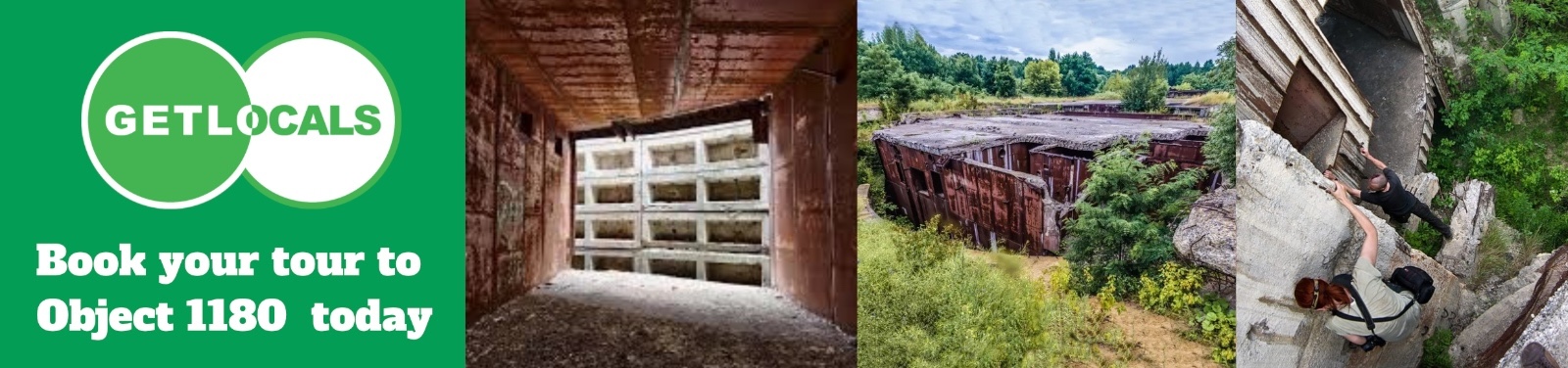
Why Object 1180 Is Worth Visiting: A Forgotten Soviet Nuclear Relic
Object 1180, also known as the Olișcani Bunker, is one of the largest underground military installations the Soviet Union ever built in Moldova. It sits hidden in a forest near the village of Olișcani, in the Șoldănești district, about 120 kilometers north of Chișinău — roughly a two-hour drive from the capital.
Construction began between 1984 and 1985. The bunker was designed as a reserve command post for the Southwestern Theater of Military Operations of the Warsaw Pact general staff. At the height of the Cold War, the Soviets prepared for the worst: Object 1180 was meant to give senior military and political leadership at least 24 hours of fully isolated command capability after a nuclear strike, ensuring the chain of command for a “second strike” would survive.
Its cost was staggering: 32 million Soviet rubles. To put that in perspective, a standard five-story apartment block cost about 1 million rubles at the time. The Chișinău circus cost 2 million. The national opera and ballet theater cost 4 million. In other words, this bunker consumed the equivalent of a small city’s construction budget.
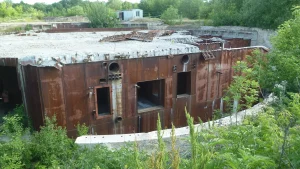
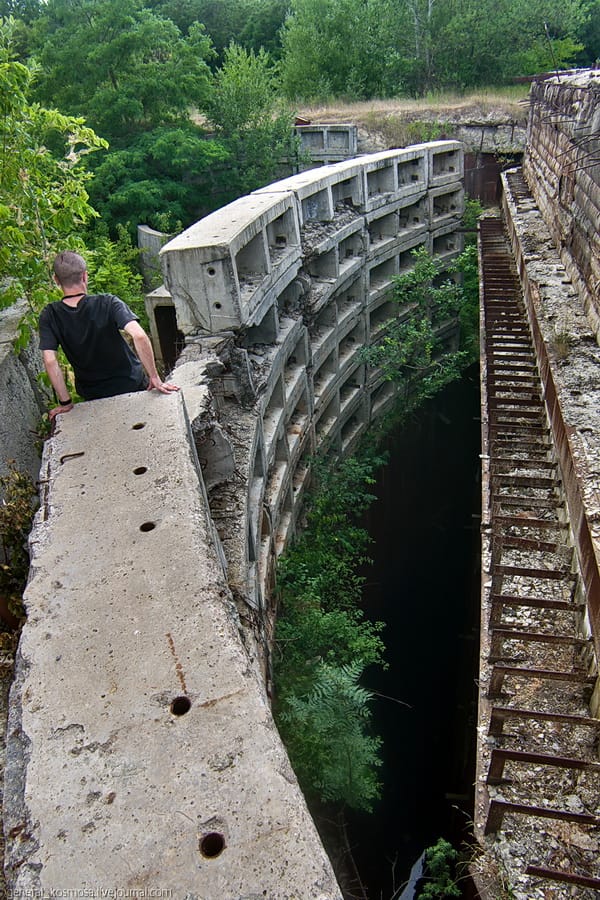
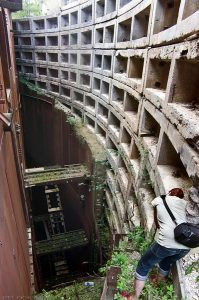
The structure consists of two massive cylindrical reinforced-concrete shafts, each about 32 to 36 meters in diameter and roughly 60 meters deep, divided into 10 to 13 underground levels. A metal passage (a postern) about 20 meters long connects the two cylinders, carrying cables, pipes, and ventilation systems. The design was meant to withstand the shockwave of a nearby nuclear explosion, with several meters of concrete on top and shock-absorbing buffer structures.
But the project was never finished. In 1991, the Soviet Union collapsed, and construction stopped overnight. Today, the lower half of the bunker has flooded up to the sixth level and below. The upper levels have been stripped by metal scavengers — staircases stolen, metal cut out and sold. What remains is eerie and surreal: heavy blast doors still in place, the outlines of command rooms and communication centers still visible, but dominated by rust, darkness, and standing water. Some reports say that even in summer, ice can still be found under the water.
How to Get to Object 1180 from Chișinău
The Route at a Glance
From Chișinău, the route runs roughly as follows: leave the capital and head north on the R13 highway, passing toward Orhei or Șoldănești, then turn onto rural roads leading to Olișcani village. The bunker sits in the forest outside the village, about a mile (1.6 km) on foot from the main road.
Drivers need to leave the paved road at a junction on the Șoldănești highway and turn onto a narrow road made of concrete slabs. That concrete road is badly broken, partly dismantled, or buried. The final stretch may require driving on dirt tracks.
The Difficulties of Driving Yourself
Even if you have a car, finding the exact entrance is far harder than it sounds. Multiple firsthand accounts describe the same challenge: the bunker is surrounded by roughly 196 hectares of forest, and the surface buildings have long been swallowed by vegetation. Concrete roads are covered in moss and shrubs. From a distance, all you see are a few huge concrete slabs suddenly appearing among the trees, or a concrete “bowl” filled with rainwater.
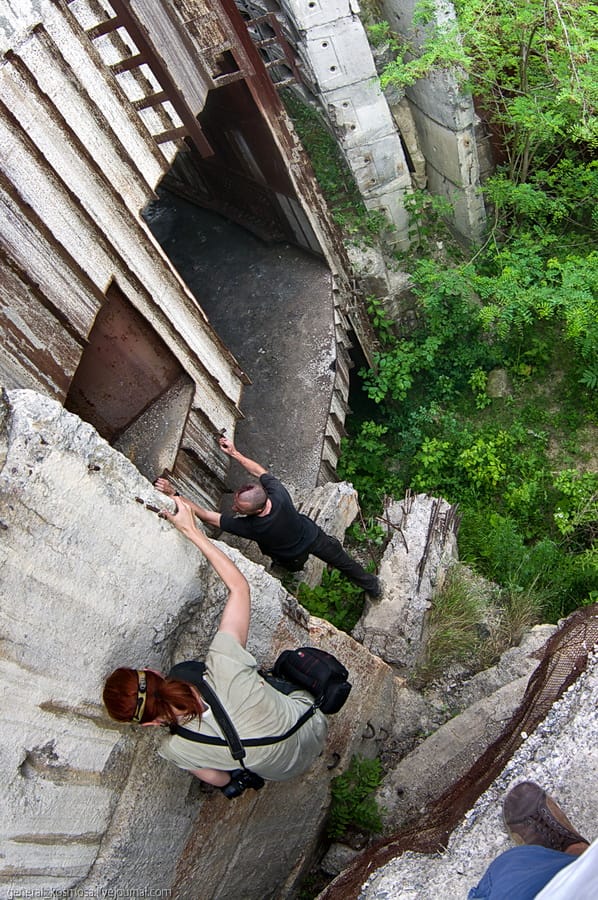
The bigger problem is the state of the site. It is not maintained as a tourist attraction. There are no fences, no walkways, no lighting, no safety signs. Entry from the upper levels is possible “for the first few floors on foot,” but most staircases are missing or replaced by “rickety makeshift structures” built by looters. The lower levels are completely flooded, with no barriers at the edges. A former guard interviewed about the site recalled that in 1992, a curious visitor fell from the edge, and divers searched for two days before finding the body.
The land is also under private or state forestry management, and informal watchmen may be present. A 2014 field report described journalists being discovered and ordered off the site by a guard who claimed it was “private territory” and off-limits.
Why Public Transport Doesn’t Work
There is no public transport route that reaches Object 1180. The nearest village, Olișcani, may have a few local buses passing through, but from the village to the bunker there is no shuttle, no taxi, and no marked trail. Add the hidden entrance and the physical dangers on site, and going alone without a local guide is a genuinely bad idea.
Why a Guided Tour Is the Best Option
1. Safety Comes First
Object 1180 is not a museum. It is an abandoned, partially flooded, structurally compromised military ruin. The floors are uneven, staircases are missing, holes open into darkness, and the lower levels are deep water with no railings. Metal scavengers have cut through structural elements. There is no lighting, no emergency exit signage, and no one on site to help if something goes wrong.
A guided tour solves this. Reputable operators provide helmets, headlamps, rubber boots, and sometimes gas masks for the experience. The guide knows which floors are stable, where the drop-offs are, and which areas are flooded or unsafe. They carry communication equipment and know the way out. For anyone who is not an experienced urban explorer with proper gear and local knowledge, this alone justifies the cost.
2. Navigation Is Genuinely Hard
The bunker is not signposted. There is no official address, no visitor center, no Google Maps pin that takes you to a parking lot. The forest roads are unmarked, and the final approach is on foot through dense vegetation. Even people who have been there before describe getting lost or needing a local to point the way.
A guide removes this entire problem. They pick you up from your hotel in Chișinău, drive the route, park in the right place, and lead you directly to the safest entrance. You spend your time experiencing the site, not searching for it.
3. Legal and Access Issues
Because the site is on managed land, access is not guaranteed for random visitors. Guards or forestry officials may ask you to leave. Tour operators have established relationships and permissions that individual travelers do not. A guided tour gives you legitimate access rather than a trespassing risk.
4. Historical Context You Cannot Get on Your Own
Walking through a dark, flooded concrete cylinder is impressive, but without context it is just a ruin. A good guide explains what each room was for: the command center, the communications hub, the life-support systems, the air filtration, the power generators, the decontamination chambers. They explain how the 24-hour isolation was supposed to work, why the bunker was built here, and what happened when the Soviet Union collapsed.
This turns a creepy walk through a flooded basement into a real Cold War history lesson. For most visitors, that context is the difference between “we saw an abandoned bunker” and “we understood what the Soviet Union was preparing for.”
5. Logistics and Comfort
A typical guided tour includes:
-
Hotel pickup and drop-off in Chișinău
-
Round-trip transport in a vehicle that can handle the rough roads
-
All protective equipment (helmet, lamp, boots)
-
A local guide who knows the site and its history
-
Approximately 6 hours total, with about 3 hours of driving and 3 hours on site
Doing this independently means renting a car that can survive broken concrete roads, buying gear, finding the site, and hoping you don’t get lost or injured. The tour removes all of that friction.
6. Cost Is Reasonable When Split
Private tours to Object 1180 are often quoted around €190 per group, not per person. If you are traveling as a couple or a small group of friends, the per-person cost drops quickly. When you factor in car rental, fuel, the risk of damage to a rental car on the concrete slabs, and the cost of gear you would otherwise buy, the tour is often cheaper than doing it yourself — and vastly safer.
What to Expect on a Guided Tour
A typical itinerary looks like this:
-
Morning pickup from your hotel in Chișinău
-
2 to 2.5 hours drive north, with a possible stop for coffee or photos
-
Arrival at the forest edge, gear-up, and a short walk to the bunker
-
2 to 3 hours inside, exploring the upper levels, the connection passage, the command areas, and the flooded lower sections from safe vantage points
-
Return walk and drive back to Chișinău, arriving in the late afternoon or early evening
You should bring:
-
Closed-toe shoes with good grip (boots are often provided, but bring socks)
-
A warm layer — underground temperatures are cool year-round
-
A sense of adventure and a tolerance for dark, damp, enclosed spaces
-
A camera (but be careful with water and condensation)
You should not bring:
-
Young children or anyone with claustrophobia
-
Anyone with mobility issues — the terrain is uneven and there are no handrails
-
Expensive electronics you cannot protect from moisture
Common Misconceptions
“I can just drive there and walk in.” In theory, yes. In practice, the road is hard to find, the entrance is hidden, the site is dangerous, and you may be asked to leave. Many independent visitors report spending hours just locating the bunker.
“It’s just a flooded basement.” It is not. It is a 60-meter-deep, multi-level military command complex with two massive cylinders, blast doors, and a connecting tunnel. The scale is genuinely impressive, even in its ruined state.
“A tour is too expensive.” A private tour at around €190 for the group is comparable to renting a capable car for a day, buying gear, and paying for fuel — with none of the risk. Split between two or three people, it is excellent value.
“I’ll just join a group tour.” Group tours to Object 1180 are rare and irregular. Most operators run private tours because the site is remote and the logistics are custom. If you want a fixed group departure, you may need to wait for a scheduled date or organize your own small group.
Practical Tips
-
Book in advance. This is not a walk-up attraction. Operators need time to arrange transport, gear, and access.
-
Confirm what’s included. Ask specifically about hotel pickup, protective equipment, and whether the guide speaks your language.
-
Ask about water levels. The lower levels flood seasonally. If you want to see the maximum accessible area, ask when the water is lowest.
-
Wear the right clothes. You will get dirty. The bunker is damp, rusty, and muddy.
-
Respect the site. Do not remove artifacts, do not damage structures, and do not enter flooded areas. This is a historic site, not a playground.
-
Bring a headlamp even if one is provided. A backup light is never a bad idea underground.
-
Plan for a full day. The drive alone is 4 to 5 hours round trip. Do not schedule anything important for the evening.
Final Verdict
Object 1180 is one of the most fascinating Cold War sites in Eastern Europe — a 32-million-ruble nuclear command bunker that was never finished, now slowly flooding and rusting in a Moldovan forest. It is worth seeing. But it is not a site you can casually visit on your own.
The combination of an unmarked route, dangerous internal conditions, legal ambiguity, and the lack of any on-site facilities makes independent travel risky and unreliable. A guided tour from Chișinău solves every one of these problems: transport, navigation, safety gear, access, and historical context. It turns a difficult and potentially dangerous expedition into a smooth, informative, and memorable day trip.
If you want to see Object 1180, book a guided tour. It is the best option — not just for convenience, but for safety, access, and understanding.
Book your private tour to Bunker 1180 with Moldova tours today.