Chișinău is not a city that wears its history on its sleeve. The Moldovan capital, with its leafy boulevards and Soviet-era apartment blocks, presents itself as a quiet administrative center rather than a treasure trove of cultural riches. But beneath this unassuming surface lies a network of museums that, taken together, tell the story of a land that has been at the crossroads of empires for millennia. From the world’s oldest surviving Pushkin residence to a museum housed in a 19th-century water tower, Chișinău’s museums offer something increasingly rare in European travel: genuine discovery without the crowds.
This is a Chisinau city guide to the capital’s museums—the essential ones, the overlooked ones, and the reasons each deserves a place on your itinerary.

The Big Three: Chișinău’s Essential Museums
Three museums form the backbone of any serious cultural visit to Chișinău. They are the city’s most visited institutions, the ones with the deepest collections and the widest historical scope. Together, they cover natural history, archaeology, fine art, and the complicated story of Moldova itself.
The National Museum of Ethnography and Natural History
Founded in 1889, the National Museum of Ethnography and Natural History is not just the oldest museum in Moldova—it is also the most visited . This is a museum of two halves, and both are worth your time.
The natural history section occupies the museum’s historic building on M. Kogălniceanu Street, a structure whose Moorish-style architecture makes it one of the most photographed buildings in the capital . The building alone justifies a visit, with its ornate facade and the sense of late-19th-century ambition that permeates its halls.
Inside, the collections are vast. The museum holds over 214,000 exhibits exploring Moldova’s flora, fauna, and traditional culture . The star attraction, however, is paleontological: the skeleton of a prehistoric giant deinotherium, a prehistoric elephant-like creature that once roamed the region . This exhibit has been drawing visitors for generations and remains one of the museum’s most enduringly popular displays.
The ethnographic collections are equally significant, documenting the rural traditions, folk costumes, and domestic life of Bessarabia—the historical region that now forms the bulk of modern Moldova. The museum also operates several branches outside the capital, including the Village Museum, the Balioz Manor, and the Saharna-Țipova museum complex .
For a first-time visitor to Moldova, this museum provides essential context. It answers the question of what this place was before it became a country—and why its traditions remain so resilient.
The National Museum of History of Moldova
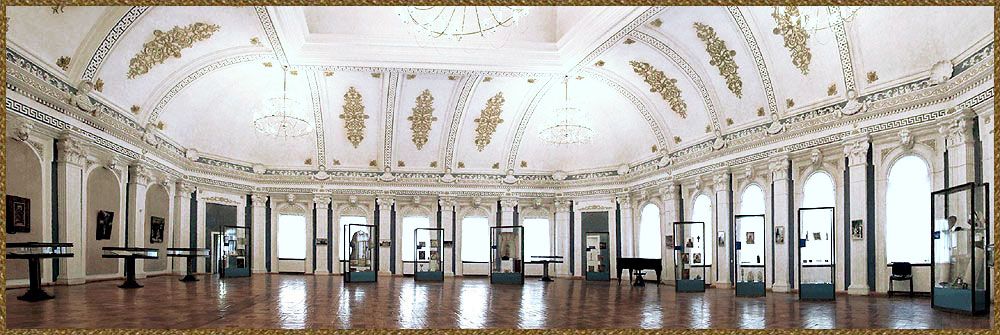
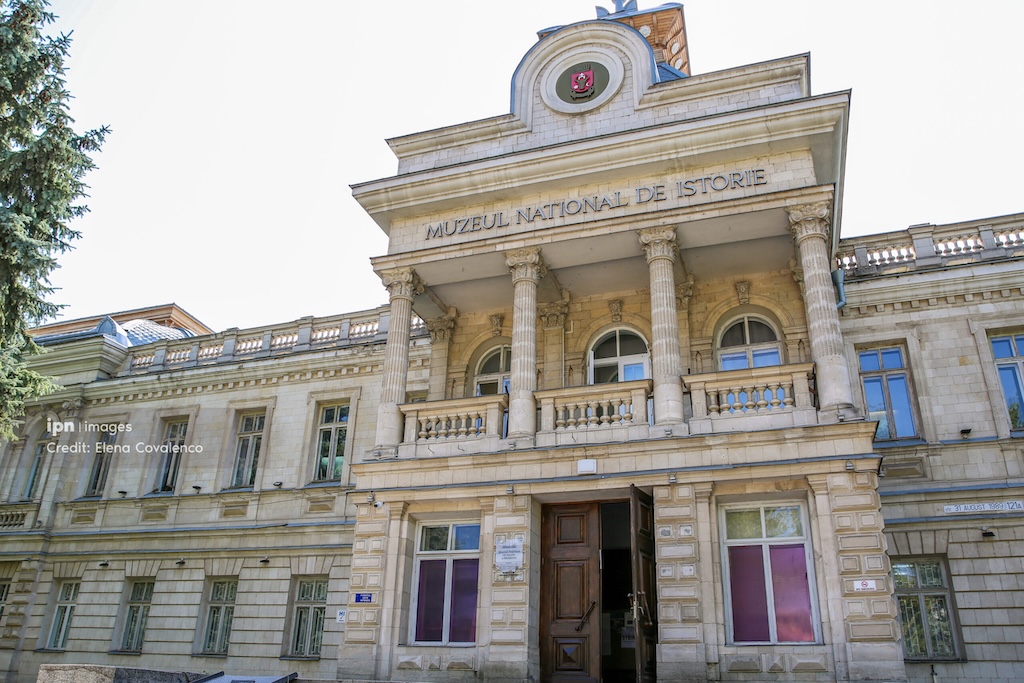
If the Ethnography Museum tells you what Moldova is, the National Museum of History tells you how it became that way. Located on 31 August 1989 Street in the heart of Chișinău, this is the country’s primary historical institution, holding over 345,000 objects in its collections .
The museum’s history is itself a reflection of Moldova’s turbulent 20th century. It was established in 1983 as the State Museum of History of the Moldavian SSR, built on the foundations of the Republican Museum of Military Glory and the State Museum of History and Regional Studies . The building it occupies—the former boys’ gymnasium where revolutionary Sergei Lazo once studied—is a historic monument in its own right .
Following Moldova’s independence in 1991, the museum was renamed, and its mission shifted from Soviet-era narratives to a more comprehensive national history. In 2006, it absorbed the Archaeology Museum of the Academy of Sciences, becoming the National Museum of Archaeology and History, before reverting to its current name in 2013 .
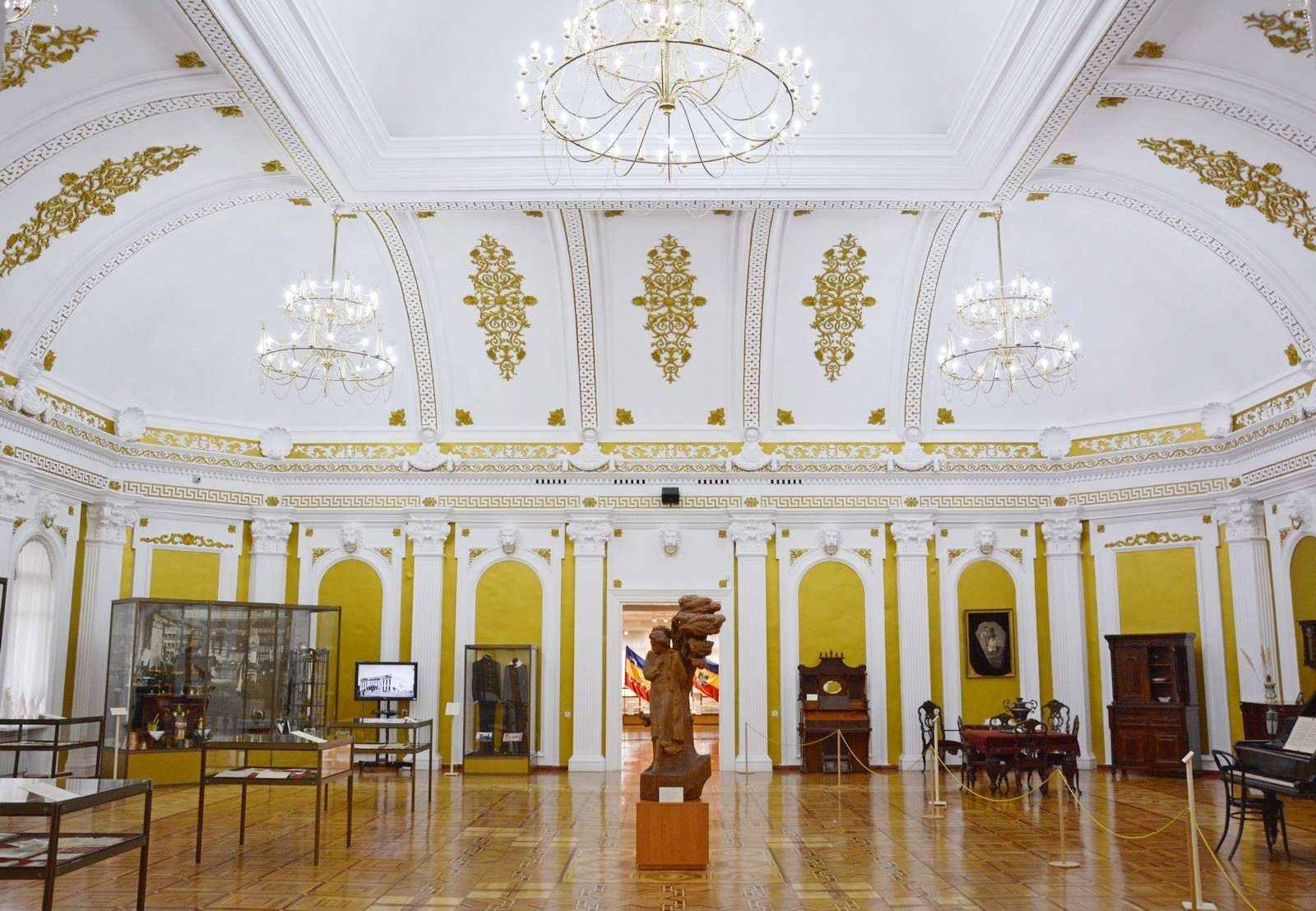
The permanent exhibition, “History and Civilization,” spans six halls and covers the sweep of Moldovan history from the Paleolithic era to the proclamation of independence . Highlights include ancient treasures from the Cucuteni-Trypillia culture—one of Europe’s oldest civilizations—medieval artifacts, and a spectacular diorama dedicated to the Iași-Chișinău military operation of 1944 .
For visitors accustomed to Western European museums, the National Museum of History offers something different: a museum that is still in the process of working through its own history. The Soviet period is not glossed over; it is examined, and sometimes contested. One foreign visitor noted that the museum “focuses on refuting Russian propaganda” while acknowledging that some sections, particularly those dealing with the Holocaust in Moldova, “lack depth” . This is a museum that is honest about its own evolution—and all the more interesting for it.
The museum is also the most popular in the country by visitor numbers during special events, drawing over 15,000 people during the 2025 European Museum Night alone .
The National Museum of Art of Moldova
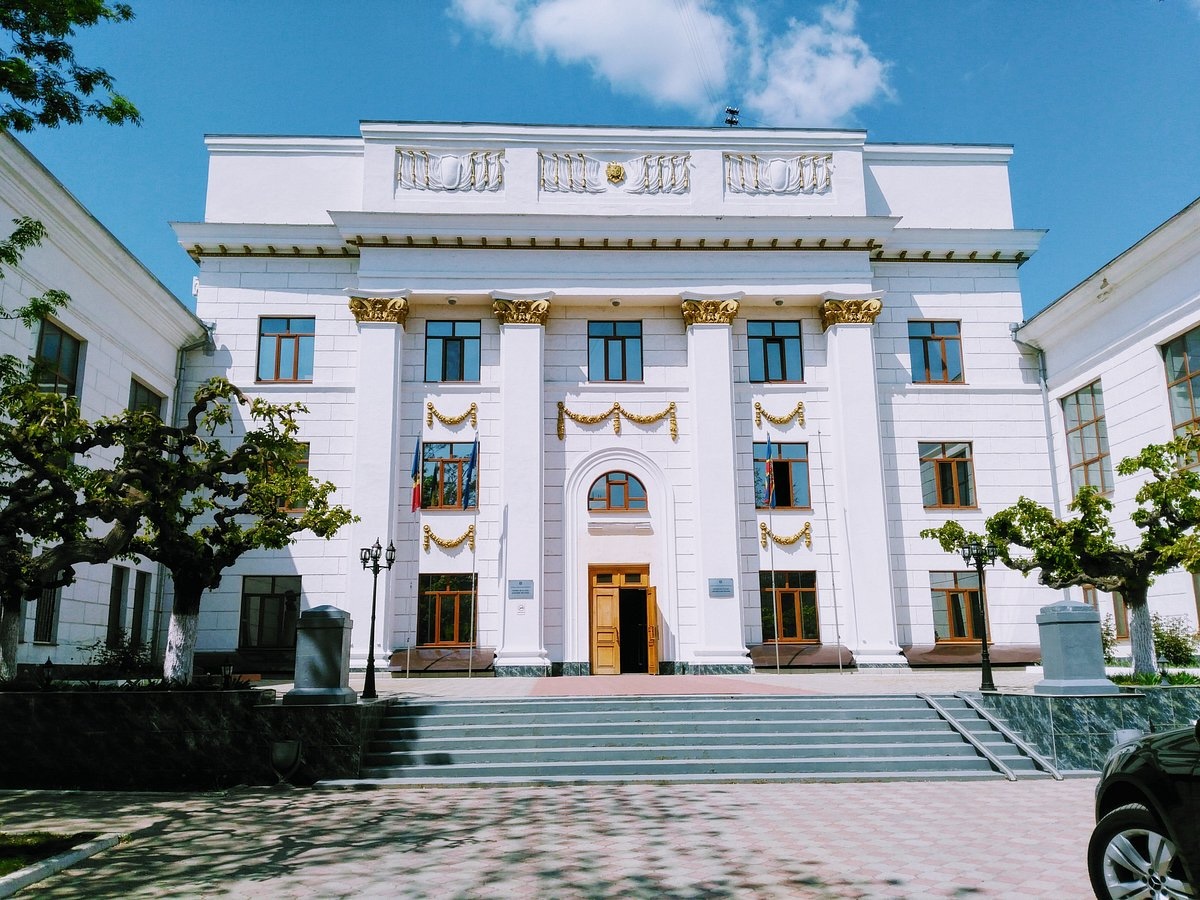
Founded in 1939, the National Museum of Art of Moldova is the country’s premier institution for visual culture, housed in a complex of historic buildings in the city center. The museum’s main exhibition space, the Dadiani headquarters, was designed by architect Alexandru Bernardazzi in 1901 as a girls’ gymnasium—a building that has since served as the headquarters of the Communist Party of the Moldavian SSR before being transferred to the museum in 1989 .
The collection numbers nearly 40,000 works, spanning ancient art, medieval icons, Bessarabian painting, Russian art, and Western European painting and sculpture from the 17th to 20th centuries . The museum’s holdings include works from Italy, France, Germany, Spain, and the Netherlands, making it a surprisingly cosmopolitan collection for a city of Chișinău’s size .
In recent years, the museum has undergone significant restoration and modernization. In 2016 and 2021, previously closed sections of the Dadiani building were reopened after decades of decay following the 1990 earthquakes . In 2024, the museum received Moldova’s highest state distinction—the Order of the Republic—on its 85th anniversary . The permanent national painting exhibition was reopened with interactive augmented and virtual reality experiences, bringing works like Mihail Grecu’s “Golden Autumn” to life through digital technology .
The museum attracted 9,600 visitors during the 2025 Museum Night, second only to the National History Museum . With its mix of historic architecture, significant collections, and new digital initiatives, it represents the future of Moldovan cultural institutions—and a compelling reason to spend an afternoon in Chișinău.
Beyond the Big Three: Chișinău’s Hidden Museums
The essential museums are not the only ones worth visiting. Chișinău’s smaller institutions offer intimate experiences that the larger museums cannot replicate.
The Pushkin House Museum
On a quiet street near the city center, a small 19th-century cottage preserves one of Chișinău’s most unexpected claims to fame: the only surviving Pushkin residence in the world outside Russia. Alexander Pushkin, Russia’s greatest poet, was exiled to Bessarabia from 1820 to 1823, and this house was his home during that period .
The museum is small but evocative. Period furniture, manuscripts, personal items, and portraits recreate the poet’s daily life during his exile . It was here that Pushkin wrote parts of “The Prisoner of the Caucasus” and “The Fountain of Bakhchisarai”—works that would cement his reputation . The house also holds a remarkable secret: among its collections is a rare 18th-century Meissen porcelain vase from a set created in 1741 as a gift for French King Louis XV . How this piece found its way to a modest Chișinău cottage remains a subject of scholarly debate.
For literature lovers, the Pushkin House Museum is a pilgrimage site. For everyone else, it is a quiet, atmospheric glimpse into a lesser-known chapter of European literary history.
The Chișinău City History Museum (Water Tower)
Few museums have a more distinctive home than the Chișinău City History Museum. Known locally as the Water Tower, the building was constructed at the end of the 19th century according to plans by architect Alexandru Bernardazzi—the same architect responsible for the Dadiani building that now houses the National Art Museum .
The museum reopened in its current form in 2011 after a restoration, and its permanent exhibition, “Historical and Economic Chișinău,” traces the city’s development from its earliest days through the Soviet era and into independence . The Water Tower itself is an architectural landmark and one of the symbols of the capital.
Sensorica
Moldova’s first immersive and interactive art museum opened recently in Chișinău, occupying 250 square meters of digital art and cutting-edge technology . Sensorica represents a different kind of museum experience—one that prioritizes engagement and spectacle over historical preservation. For travelers interested in contemporary art and digital culture, it offers a counterpoint to the city’s more traditional institutions.
Niche Museums
Chișinău is also home to a number of specialized museums that cater to particular interests. The Military History Museum holds over 20,000 items, including weapons, uniforms, and documents from Moldova’s conflicts . The Museum of the History of the Jews in Moldova, though small, offers guided tours in multiple languages and addresses a chapter of Moldovan history that was long suppressed . The Museum of Electric Transport traces the history of Chișinău’s trolleybus system back to 1888 . The Museum of the War in Afghanistan commemorates the Soviet-Afghan conflict through artifacts donated by families of soldiers who did not return .
These smaller museums rarely appear in guidebooks, but they offer something the larger institutions cannot: intimacy, specificity, and the sense that you are discovering something for yourself.
Practical Considerations for Visiting
Opening hours and tickets. Most national museums in Chișinău are open daily except Monday, typically from 10:00 to 18:00 (with some variation by season). The National History Museum is open daily from 10:00 to 18:00 from April to October and 10:00 to 17:00 from November to March, closing on Fridays . The National Art Museum is closed on Mondays . Tickets are inexpensive—the National History Museum charges around 50 lei (roughly €2.50) for adults, with student discounts available .
Language and guided tours. English-language signage and materials are limited in most museums. English-speaking guides can typically be arranged for around $12–$18, but this service is not included in the ticket price and should be requested in advance . Many museums have staff who speak some English, but patience is required.
Museum Night. Chișinău’s museums participate enthusiastically in the annual European Museum Night, held in May. In 2025, over 35,000 people visited the national museums during the two-day event, which features free admission, special exhibitions, performances, and interactive activities . If your visit coincides with this event, it is an excellent opportunity to see the museums at their most vibrant—though expect crowds.
Accessibility. The National History Museum and the National Art Museum have both undergone renovations to improve accessibility and modernize their facilities. The Dadiani building of the Art Museum now features state-of-the-art security, conservation, and exhibition systems across 3,268 square meters . Older museums, particularly the smaller ones, may have limited wheelchair access.
Why Chișinău’s Museums Matter
There is a temptation, when visiting a city like Chișinău, to treat its museums as optional—something to do if it rains, a way to fill a few hours between wine tours. This would be a mistake.
Chișinău’s museums are not neutral repositories of objects. They are active participants in a national conversation about identity, history, and belonging. Moldova is a country that has been Romanian, Soviet, and independent within living memory. Its borders have shifted. Its language has been politicized. Its heroes have been renamed and renamed again. The museums of Chișinău are where these tensions are worked out—sometimes gracefully, sometimes awkwardly, but always honestly.
The National Museum of Ethnography and Natural History tells you what Moldovans have in common with their neighbors and what makes them distinct. The National Museum of History tells you the story of a people who have been conquered, annexed, and ignored—and who are still here. The National Museum of Art tells you that culture survives even when political structures collapse.
And the smaller museums—the Pushkin house, the Water Tower, the military collections—tell you the stories that don’t fit into grand narratives. A poet’s exile. A city’s water supply. A war that a generation of Moldovan families would rather forget.
These are not museums that will overwhelm you with their scale or their masterpieces. They are museums that reward curiosity, patience, and a willingness to engage with a country that is still figuring out what it wants to be. Visit them not because you should, but because they offer something increasingly difficult to find in European travel: the chance to understand a place on its own terms, without the filter of mass tourism or pre-packaged narratives.
Chișinău’s museums are waiting. They are small, often quiet, and almost never crowded. And they have stories to tell.
Enjoy your guided tours Moldova.
Book a day trip from Chisinau with Moldova tours.