The Jewish History of Chișinău and What to Expect on a Jewish History Tour
Chișinău, the capital of Moldova, holds one of the most layered and poignant Jewish histories in Eastern Europe. At its height in the early twentieth century, Jews constituted nearly half of the city’s population, making it one of the most significant Jewish centers in the Russian Empire. Today, that world exists largely in memory, ruins, and a handful of restored sites. A Jewish history tour of Chișinău is therefore not a journey through a thriving contemporary community, but an encounter with absence, resilience, and the complicated work of remembering.
From Foundation to Flourishing: The Early Centuries
Jewish presence in Chișinău dates back to at least the late eighteenth century. The first documented communal institution was the Hevra Kadisha, a burial society founded in 1773, which signaled the emergence of an organized Jewish community even before the city’s incorporation into the Russian Empire. Following the Russian annexation of Bessarabia in 1812, Chișinău was designated part of the Pale of Settlement, the vast territory where Jews were permitted to reside within the empire.
The community grew rapidly. By the mid-nineteenth century, Chișinău had become one of the largest and most influential Jewish communities in the Russian Empire. Jews were deeply integrated into the city’s economic and professional life, working as artisans, merchants, physicians, and educators. The Jewish Hospital, established in 1817 with community funds and officially recognized in 1843, served both Jewish and non-Jewish patients free of charge and became the largest medical institution in Bessarabia by the early twentieth century.
The Great Synagogue, built in the eighteenth century and located in the heart of the Jewish quarter, stood as the community’s central religious institution. Its architecture—a quasi-square main hall with a Greek cross plan, nine cross vaults supported by four pillars, and a women’s gallery on the second floor—reflected the community’s desire to balance religious tradition with the aesthetic norms of the surrounding European city. By the early twentieth century, Chișinău counted seventy-seven synagogues and prayer houses, a yeshiva, and a network of Jewish schools, libraries, and charitable organizations. In 1897, Jews constituted twelve percent of Bessarabia’s total population and roughly half of Chișinău’s residents.
The Pogroms and Their Aftermath
This flourishing world was shattered in April 1903. The Chișinău Pogrom, instigated by anti-Semitic articles in the newspaper Bessarabet alleging a ritual murder, erupted over three days of violence from April 6 to 8. Forty-nine Jews were killed, approximately five hundred were injured or raped, and more than a thousand Jewish homes and businesses were destroyed. The pogrom left a third of the city’s buildings, owned by Jewish residents, damaged or destroyed, and rendered some two thousand Jewish families homeless.
The impact of the 1903 pogrom extended far beyond Chișinău. As historian Steven Zipperstein has documented, the events were reported in lurid detail by newspapers across the Western world, seizing the imagination of an international public and becoming the prototype for what would henceforth be known as a “pogrom”. The Hebrew poet Chaim Nachman Bialik memorialized the massacre in his poem Be-Ir ha-Haregah (“In the City of Slaughter”), which became a foundational text of Zionist literature. A second pogrom followed in 1905, claiming nineteen more lives.
The pogroms fundamentally altered the trajectory of Chișinău’s Jewish community. They prompted waves of emigration, strengthened Zionist sentiment, and shattered illusions that Jewish life in the Russian Empire could be secure. As the President of the Jewish Community Council of Chișinău later reflected, the 1903 pogrom marked “the onset of the physical extermination of Jews and genocide against them”.

The Holocaust in Chișinău
The devastation of the pogroms was eclipsed four decades later by the Holocaust. Following the Romanian reconquest of Bessarabia in July 1941, the Romanian authorities—acting on German advice and following the model of ghettos established elsewhere in Eastern Europe—created a ghetto in Chișinău. At its peak, the ghetto housed more than ten thousand Jews, disproportionately women, children, and the elderly.
The ghetto was conceived as a holding pen for deportation. Between October 1941 and June 1942, its inmates were deported in successive waves to Transnistria, a region in southern Ukraine transformed by the Romanian authorities into a dumping ground for “undesirables”. Before these deportations, Romanian forces massacred as many as one thousand inmates in two mass shootings falsely justified as reprisals. In the ghetto, Jews suffered forced labor, malnourishment, and a complete absence of medical care.
Conditions in Transnistria were catastrophic. Gendarmes and policemen shot those who could not keep pace during the forced marches. In the camps and ghettos of Transnistria, starvation and disease claimed the lives of most deportees; only a small fraction survived to liberation by the Red Army. In one documented atrocity in October 1941, a convoy of approximately two thousand Jews was evacuated from Chișinău; they were robbed and then executed. The Romanian treatment of Chișinău’s Jews, as historian Paul Shapiro concluded, “differed little from that in other places in Nazi-dominated Eastern Europe”.
By the end of the war, Chișinău’s Jewish community had been effectively annihilated. The synagogues stood empty or destroyed, the cemeteries had been desecrated, and the survivors were scattered across the Soviet Union and beyond.
The Soviet Period and the Post-Soviet Exodus
After the war, a small remnant of Jews returned to Chișinău, but the community never recovered its former vitality. Under Soviet rule, Jewish religious life was systematically suppressed. The Great Synagogue was closed in the 1950s and subsequently demolished. By 1989, Jews constituted only 1.5 percent of Moldova’s population, or approximately 65,700 people.
The late 1980s and early 1990s brought a new exodus. As Soviet restrictions on emigration eased, approximately forty thousand Moldovan Jews emigrated to Israel, driven by new opportunities for Israeli citizenship and by the advance of the Moldovan/Romanian language, which disadvantaged Russian-speaking Jews. By the early 2000s, estimates of the remaining Jewish population ranged from 5,500 to 15,000, most of them elderly, Russian-speaking, and living in urban areas. Today, the Jewish Community Centre in Chișinău serves as the beating heart of this small community, providing food cards, medical assistance, and vocational training to those in need, often in partnership with international organizations.
Contemporary Challenges and the Work of Memory
The past two decades have seen increased efforts by the Moldovan state to acknowledge and commemorate Jewish history. In 2003, the centennial of the 1903 pogrom was marked with state participation, including President Voronin, and a monument was unveiled at the site of the old Jewish cemetery. Holocaust education was introduced into national school curricula the same year. In 1993, the surviving Jewish cemetery on Milano Street was inscribed in the Register of Monuments of the Republic of Moldova protected by the state. Since 2018, the cemetery has functioned as an open-air branch of the National Museum of Jewish History.
Yet the work of memory remains contested and incomplete. Anti-Semitic incidents have continued, including the desecration of graves in 2013, swastikas painted on a Jewish school in 2015, and the vandalism of eighty-two graves in 2020. In June 2025, thirty-seven graves in the Jewish Cemetery were again vandalized with Nazi symbols, prompting police to open a criminal investigation and the Parliament Speaker to condemn the act as a “barbaric provocation”. Property restitution has also been contentious; the ruined Rabbi Tsirilson Synagogue and Magen David Yeshiva were purchased by the Jewish community in 2010 but only secured through a court ruling in December 2015.
Positive developments coexist with these challenges. The National Museum of History of Moldova has hosted exhibitions on Jewish religious heritage and summer camps for Jewish children, including refugees from Ukraine. The U.S. Embassy has funded a $200,000 project to conserve the Beit Kaddishim, the late nineteenth-century funerary hall within the Jewish Cemetery, which still bears traces of shelling from the Second World War. These efforts reflect a growing recognition that Jewish heritage is an integral part of Moldova’s national story.

Book a tour today
What to Expect on a Jewish History Tour of Chișinău
A private Jewish history tour of Chișinău is a somber and illuminating experience. Unlike tours of cities with thriving Jewish communities, this journey is primarily about absence and memory—about learning to read the traces of a world that has largely disappeared. The tour typically encompasses several key sites, each representing a different layer of the city’s Jewish past.
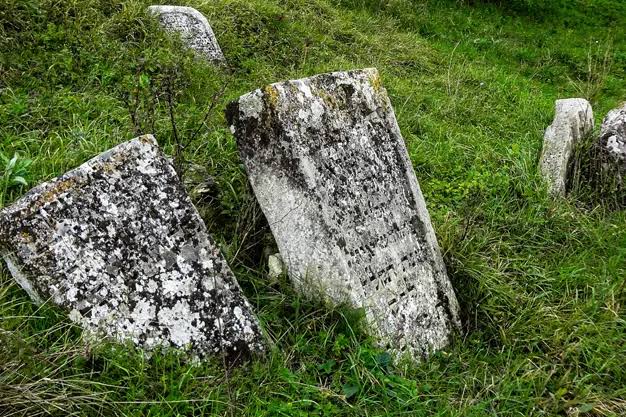
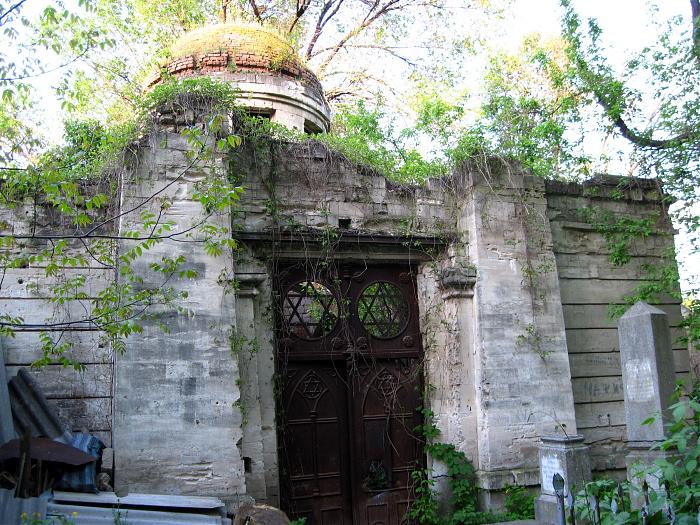
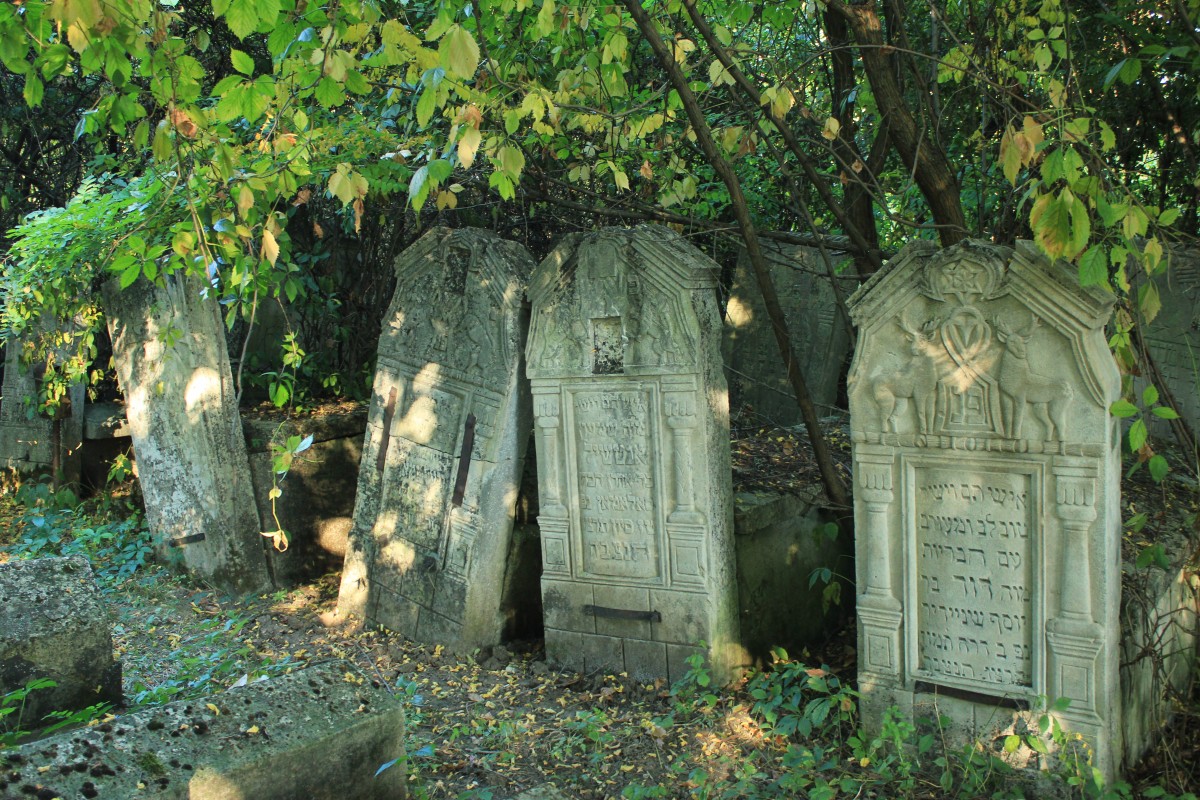
The Jewish Cemetery on Milano Street is the most substantial surviving physical remnant of Jewish Chișinău. Established in the early nineteenth century and expanded in 1887, it contains between twenty-four thousand and forty thousand graves. The cemetery is an extraordinary archive of Jewish life: the headstones record names, dates, and Hebrew inscriptions that trace the community’s history from the nineteenth century through the Holocaust and the Soviet period. The Beit Kaddishim, the funerary hall dating from the second half of the nineteenth century, stands at the heart of the cemetery, its damaged roof and surviving interior decoration bearing witness to decades of neglect and the violence of war. Visitors should be prepared for uneven ground, overgrown sections, and the emotional weight of a place that has been repeatedly vandalized yet endures as a site of mourning and memory.
The monument to the 1903 pogrom victims, located in what is now “Alunelul” Park, marks the site of the old Jewish cemetery where victims of the massacre were buried. The park’s transformation from cemetery to public green space is itself a story of erasure and reclamation; during its rehabilitation, municipal authorities insisted on preserving the pogrom monument and incorporating recommendations from the Jewish community. The monument serves as a focal point for annual commemorations attended by city officials, diplomats, and Jewish community leaders.
The Jewish Hospital complex, founded in 1817 and expanded through the late nineteenth and early twentieth centuries, stands as a monument to the community’s institutional vitality. The pavilion-style buildings, freely arranged across a large territory, housed an administration building, pharmacy, laboratory, surgical pavilion, and maternity ward. The hospital played a critical role in treating victims of the 1903 pogrom and could accommodate five hundred patients at a time, always free of charge. While the hospital no longer functions as a Jewish institution, its buildings remain among the most significant architectural traces of Jewish Chișinău.
The Jewish Community Centre offers a different perspective: the living present of a small but resilient community. Here, visitors can learn about contemporary Jewish life in Moldova and the welfare programs that sustain elderly Jews surviving on pensions equivalent to a few pounds per month. The centre is not a historical site in the conventional sense, but it is essential for understanding that Jewish Chișinău is not only a subject of historical memory but a community with ongoing needs and aspirations.
Synagogue sites and ruins are scattered throughout the city, though most are difficult to identify without expert guidance. Of the seventy-seven synagogues that once served the community, almost none survive in recognizable form. The Great Synagogue was demolished in the 1950s; its site is now occupied by other buildings. The Rabbi Tsirilson Synagogue, though returned to the Jewish community through legal action, remains in ruins. A tour guide can help visitors read the urban landscape for these traces—a building here, a plaque there—and understand what has been lost.
The National Museum of History of Moldova has periodically hosted exhibitions on Jewish heritage, such as “Voices of Synagogues,” which juxtaposes archival photographs with the current state of synagogues built between the eighteenth and twentieth centuries. Visitors should check whether such exhibitions are on view during their trip.
A well-designed tour will also include the former ghetto area, where the Jewish population was confined during the Holocaust. While few physical traces remain, the historical significance of the site demands attention. Documents from the Moldovan National Archives—including census information from the Chișinău ghetto, records of police activities, and reports on deportations to Transnistria—provide a detailed documentary record of this period.
Practical Considerations and Emotional Preparation
Visitors should approach a Jewish history tour of Chișinău with realistic expectations. This is not a tour of well-preserved heritage sites with polished exhibits and clear signage. Many sites are in disrepair, poorly marked, or require advance arrangement to access. The Jewish Cemetery, while protected as a national monument, has suffered repeated vandalism and lacks the resources for comprehensive maintenance. The ruins of synagogues stand unmarked, their histories accessible only through research or expert guidance.
The emotional weight of the tour should also be anticipated. Chișinău is a city where the Holocaust was not an abstraction but a lived reality for half the population. The stories of the ghetto, the deportations, and the massacres are not distant history but the direct experience of families whose descendants may still live in the city. A tour that engages honestly with this history will be challenging, but it will also be meaningful.
At the same time, there is resilience to be witnessed. The small Jewish community that remains, though elderly and economically precarious, maintains its institutions, commemorates its dead, and engages with the broader Moldovan society. The annual commemorations of the 1903 pogrom, attended by state officials and diplomats, represent a fragile but real acknowledgment of Jewish suffering and Jewish contribution. The conservation of the Beit Kaddishim and the establishment of the Jewish History Museum signal that memory work, however contested, continues.
Conclusion
The Jewish history of Chișinău is a story of extraordinary flourishing and catastrophic destruction, of a community that helped build the city and was nearly erased from it. A tour of Jewish Chișinău is an education in the fragility of minority life in Eastern Europe and the persistence of memory against overwhelming odds. It is a journey that asks visitors not only to learn but to bear witness—to walk through a cemetery where the dead outnumber the living, to stand in the ruins of synagogues, and to recognize that the history of Chișinău’s Jews is inseparable from the history of the city itself. For those willing to engage with its difficult truths, Chișinău offers a profound and unforgettable encounter with a vanished world and its enduring traces.
Book your Jewish history tour in Chisinau now