Moldova is a land of rolling hills, ancient forests, and vineyards—but beneath its agricultural surface lies a deeply spiritual heart. With approximately 1,500 Orthodox churches and around 50 active monasteries scattered across the country, religious tourism has become one of the most compelling reasons to visit this small nation wedged between Romania and Ukraine . From cave monasteries carved into limestone cliffs to majestic complexes founded by medieval princes, Moldova’s monastic heritage offers travelers a window into a faith tradition that has survived empires, wars, and decades of Soviet repression. This guide explores the monasteries you should not miss, and why each deserves a place on your itinerary. Let us look at some of these hidden gems in Moldova.
Why Monasteries Should Be on Your Moldova Itinerary
Religious tourism in Moldova is not merely about pilgrimage—it is about experiencing the country’s cultural and architectural soul. As tour guide Elena Scobioală explained, “Churches and monasteries are not only carriers of faith but also represent our cultural, historical, and architectural heritage” . These sites preserve centuries of artistry, from Byzantine-influenced frescoes to distinctive Moldavian architectural styles. Many monasteries also sit in stunning natural settings—forest clearings, river gorges, and rocky cliffs—making them destinations for both spiritual reflection and landscape appreciation.
The monasteries of Moldova fall into several categories: medieval princely foundations that served as royal burial sites, cave monasteries hewn directly from rock along the Nistru River, and forest retreats that offered solitude to generations of monks and nuns. What unites them is their remarkable resilience. Despite Soviet-era closures and persecution, the vast majority were reopened after 1989 and today thrive as active spiritual communities .
Căpriana Monastery: The Jewel of Moldovan Orthodoxy
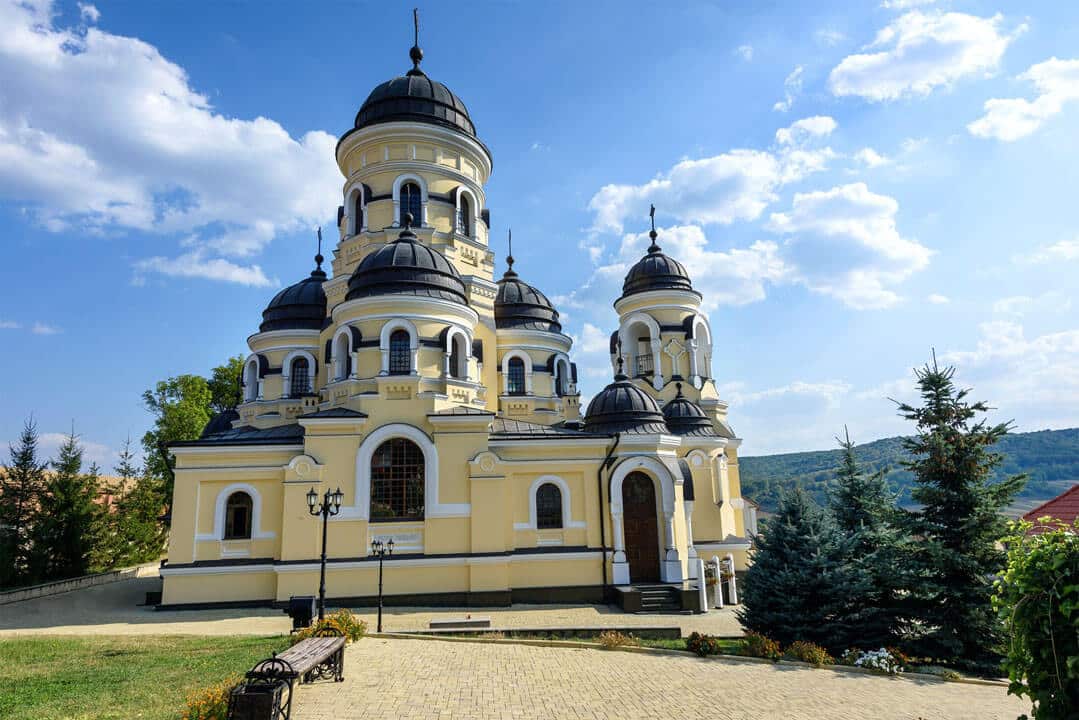
No visit to Moldova’s monasteries is complete without Căpriana. Located just 40 kilometers from Chișinău, this is one of the oldest and most representative monastic complexes in the country . Its documentary history stretches back to 1420, when it was first mentioned in a charter issued by Prince Alexandru cel Bun. By 1429, it was already operating as a monastery under the name “Mănăstirea de pe Vișnevăț” . let us look more at things to do in Moldova.
Căpriana’s significance lies not only in its age but in its royal connections. Over the centuries, it received support from Moldova’s greatest rulers, including Ștefan cel Mare (Stephen the Great)and Petru Rareș . The main church, dedicated to the Dormition of the Mother of God, reflects Byzantine and Gothic influences—a distinctive example of Moldavian religious architecture.
After being closed during the Soviet regime, Căpriana was reopened in 1989 and now serves as an important spiritual center attracting pilgrims and visitors alike . The monastery is set in a forest, creating an atmosphere of profound tranquility just a short drive from the capital. For travelers based in Chișinău, it makes an ideal half-day excursion.
Curchi Monastery: The White Pearl of Moldovan Monasticism
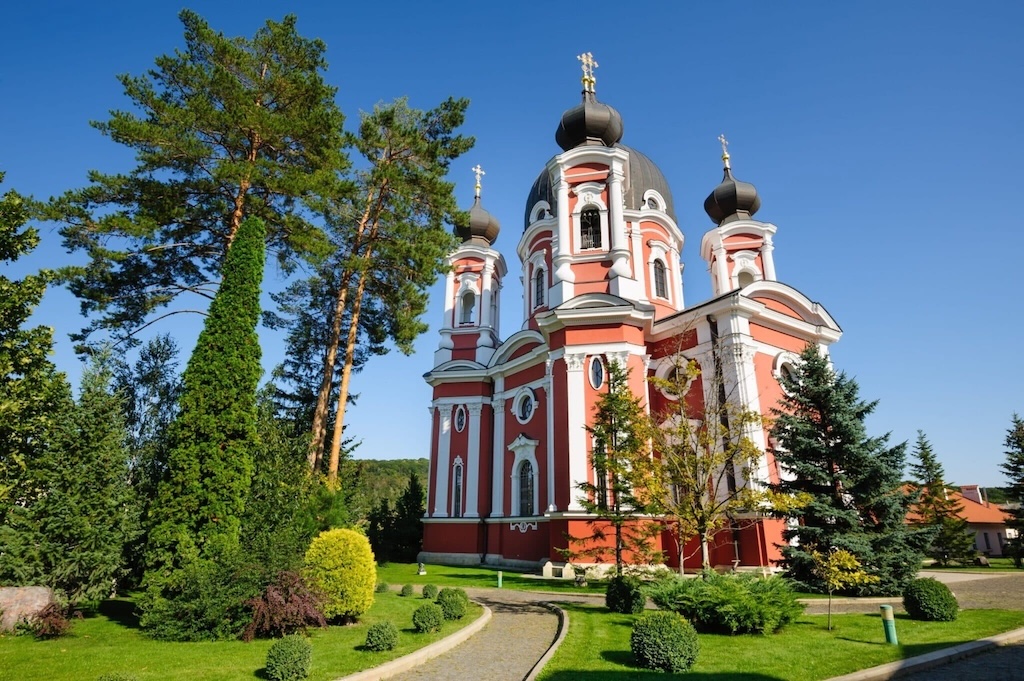
If Căpriana is the historical heart of Moldovan monasticism, Curchi is its architectural crown. Located 12 kilometers from Orhei and about 55 kilometers from Chișinău, this monastery is renowned for its brilliant white Orthodox buildings with golden domes, set in a beautiful valley .
Curchi has been described as “the pearl of monasticism in the Republic of Moldova” . Its cathedral, dedicated to the Nativity of the Mother of God, is a masterpiece of Moldavian religious architecture. The monastery also preserves a remarkable library of old books—a testament to the centuries-old tradition of monastic scholarship in the region .
The monastery has experienced a dramatic history: after falling into ruin during the Soviet period, it underwent extensive restoration beginning in 2006. Documentary films produced at the time captured the transformation “from ruins to elevation” . Today, Curchi is not only an active monastery but also one of the most photogenic destinations in Moldova, particularly in spring when the surrounding valley blooms.
Hâncu Monastery: A Forest Retreat with a Story
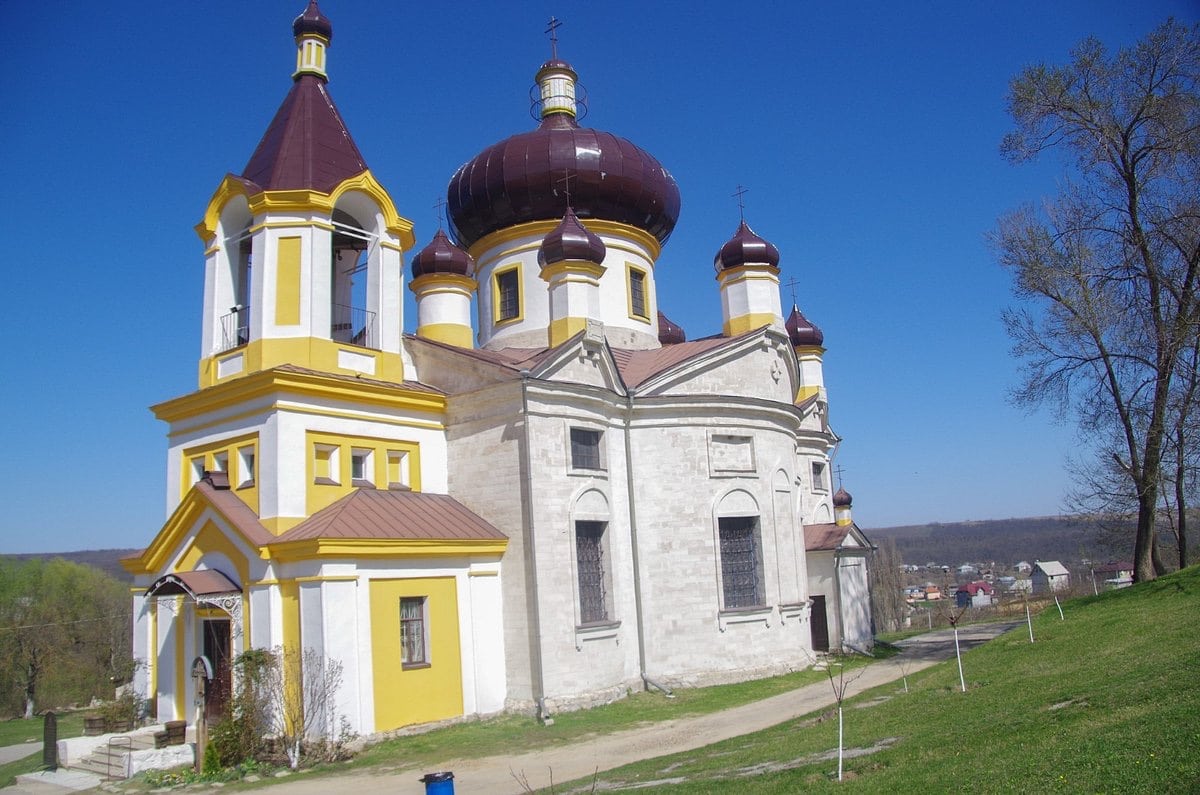
Hidden in the forests of Nisporeni district, Hâncu Monastery offers perhaps the most intimate and contemplative experience among Moldova’s major monastic sites . Founded in 1678 by the boyar Mihalcea Hâncu, the monastery was established at the wish of his daughter, who chose the monastic path. Originally a monastery for nuns, it was converted to a monastery for monks during Russian and Soviet rule, then reverted to a convent after 1990 .
The complex includes two churches—one old stone structure and a newer, imposing church built in traditional Moldavian style. What makes Hâncu special is its setting: surrounded by dense forest, the monastery offers “silence, the beauty of the place, and an atmosphere of profound recollection” . For travelers seeking a quiet retreat away from the more visited sites, Hâncu is an excellent choice.
The monastery is also significant as the resting place of Moldovan writer and politician Ion Inculeț, who served as president of the Moldavian Democratic Republic in 1918. His grave adds a layer of historical importance to the site’s spiritual significance.
Saharna Monastery: Where Nature and Spirituality Converge
For those who want to combine faith with natural beauty, Saharna Monastery is unmatched. Located 110 kilometers north of Chișinău on the right bank of the Nistru River, this monastery is considered among the largest pilgrimage centers in Moldova . It comprises two distinct monasteries: a cave monastery (Bunavestire) and a ground-level monastery (Sfânta Treime) .
The spiritual significance of Saharna is profound. The monastery holds the relics of Saint Macarie, unique in the country . According to legend, a monk from the ancient cave monastery once saw the radiant image of the Mother of God on one of the high rocks; upon climbing, the monks discovered a footprint in stone, which they considered a divine sign of the place’s purity .
Beyond its religious importance, Saharna offers spectacular natural scenery. The Saharna River gorge stretches for 16 kilometers, tumbling over more than 30 thresholds and waterfalls . From the rocky heights, visitors enjoy exceptional views of the forested valley. The area also contains important archaeological remains, including a Geto-Dacian fortress from the 4th-3rd centuries BCE .
Țipova Monastery: Carved into the Cliffs
One of Moldova’s most visually striking religious sites, Țipova Monastery is a cave complex carved directly into the limestone cliffs along the Nistru River. While not detailed in the search results, it consistently ranks among travelers’ must-see lists alongside Saharna, Japca, and Butuceni as “true symbols of national religious tourism” .
The monastery’s prayer chambers and monastic cells are hewn from the rock face, creating a dramatic juxtaposition of natural and human-made sacred space. The location offers panoramic views of the Nistru valley and represents one of the oldest forms of monasticism in the region—the eremitic tradition of cave-dwelling ascetics.
Japca Monastery: The Unbroken Chain
Japca Monastery, located on the right bank of the Nistru River in northern Moldova, holds a unique distinction: it is the only monastery in Bessarabia that was not closed during the Soviet period . Founded in the 17th century as a cave skete, it was transformed into a monastery in 1818through the initiative of Metropolitan Gavriil Bănulescu-Bodoni .
This unbroken continuity of spiritual life gives Japca a special authenticity. The monastery maintained an austere regime: no electricity, services in Church Slavonic, and deep monastic rigor . The complex includes stone churches, a church carved into the rock, cells, and springs considered healing . For travelers interested in experiencing living monastic tradition rather than restored historical sites, Japca offers a rare and genuine encounter.
Other Monasteries Worth Exploring
Several other monasteries merit mention for travelers with more time:
-
Vărzărești Monastery: Founded in the 18th century, this monastery has connections to the Rudi skete and played a role in the spiritual life of the region during the 19th century .
-
Rudi Monastery: Located in northern Moldova, this monastery is preparing to celebrate its 250th anniversary and has been the subject of extensive restoration efforts .
-
Cosăuți Monastery: Founded in 1757, this monastery near Soroca was closed in 1833 and reopened in 1990. It was reorganized as a convent in 2015 .
-
Țigănești Monastery: This monastery recently celebrated 300 years since its founding in 2025, marking three centuries of continuous prayer and spiritual service .
-
Frumoasa Monastery: While this monastery is located in Iași, Romania (not Moldova), it is worth noting for travelers crossing the border, as it represents a related architectural tradition .
The “Cross of the Monasteries” Route
For travelers seeking a structured spiritual itinerary, Moldova offers a unique pilgrimage route: the “Cross of the Monasteries” (Crucii Mănăstirilor) in Călărași district. This route features four monasteries—Hârjauca, Hârbovăț, Frumoasa, and Răciula—arranged in a cross shape when viewed from above . The geometric arrangement makes this route particularly attractive for pilgrims and adds a layer of symbolic meaning to the journey.
Practical Tips for Visiting Moldovan Monasteries
Dress respectfully. Orthodox monasteries are active places of worship. Women should cover their heads and shoulders; men should remove hats. Avoid shorts and sleeveless tops.
Check opening hours. While most monasteries welcome visitors, some have restricted hours for tourists, especially during services. Morning liturgies (typically 7-9 AM) and evening services are central to monastic life.
Photography restrictions. Many monasteries prohibit photography inside churches. Always ask before taking pictures, and respect any posted signs.
Combine with wine tourism. Many monasteries are located near Moldova’s famous wineries. Cricova, Mileștii Mici, and Călărași wineries are within reasonable distance of several monastic sites, allowing you to combine spiritual and culinary experiences.
Allow time for silence. These are not merely tourist attractions—they are living communities of prayer. The most rewarding visits include time for quiet reflection, whether in a church, a garden, or simply sitting on a bench overlooking the valley.
Conclusion
Moldova’s monasteries offer something increasingly rare in modern travel: authentic spiritual heritage in unspoiled natural settings. From the royal foundation of Căpriana to the cliff-carved caves of Țipova, from the forest solitude of Hâncu to the unbroken tradition of Japca, each monastery tells a story of faith persisting through centuries of change. Whether you are a pilgrim, a history enthusiast, or simply a traveler seeking beauty and tranquility, Moldova’s monastic circuit will leave you moved and enriched. In a country often overlooked on the European travel map, these sacred sites stand as testament to a people who, through all their trials, never stopped building toward the heavens.
Book day trips and excursions from Chisinau with Moldova tours.