Under the Concrete Dome: Why the Chișinău State Circus Has Become a Must-See Stop on Soviet Nostalgia Tours
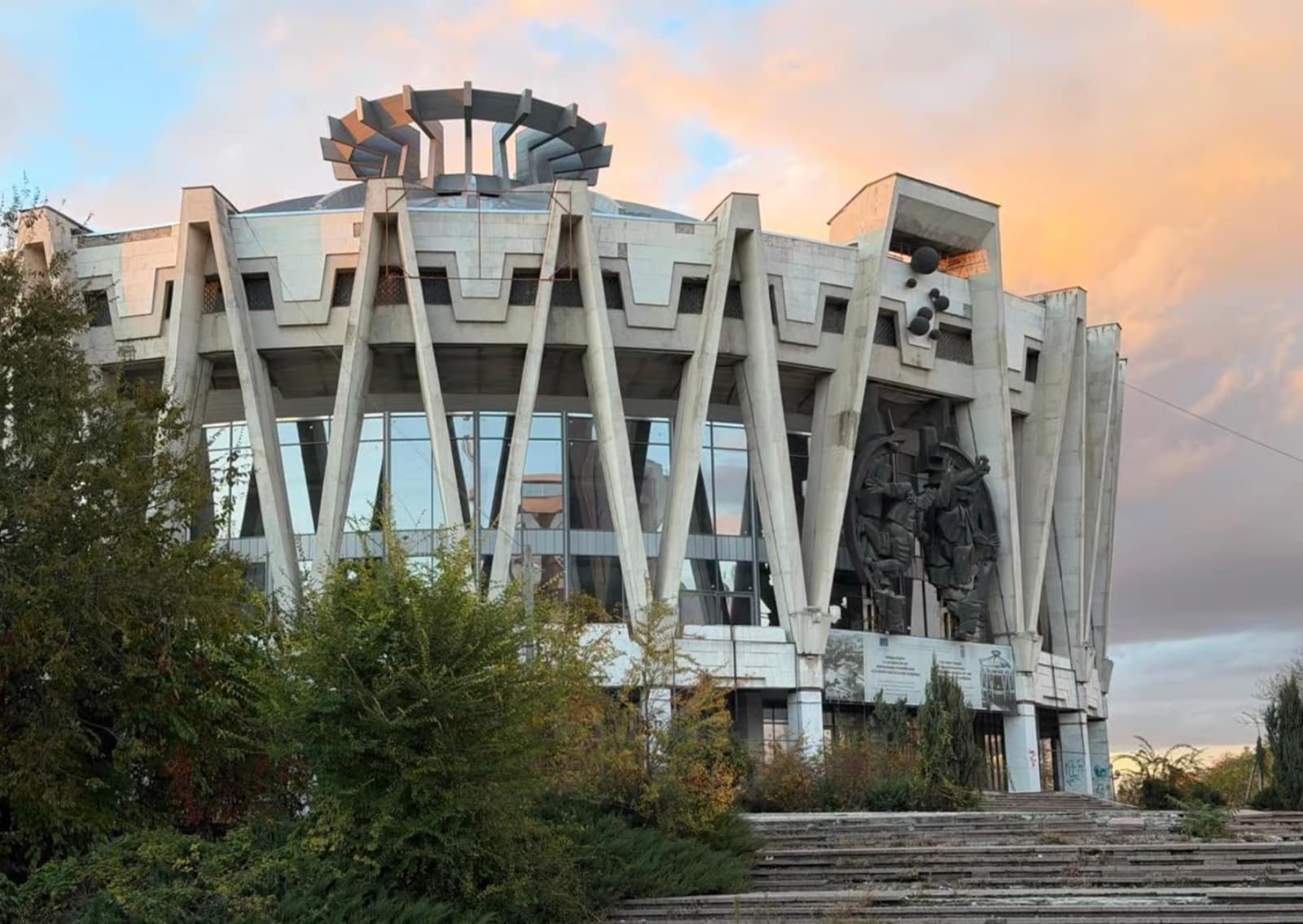
On the tourist map of Chișinău there is a curious anomaly: a building once celebrated as the most comfortable circus in the Soviet Union and the fourth largest in the world, rarely featured prominently in mainstream travel guides, yet occupying an irreplaceable position in virtually every tour product themed around Soviet nostalgia. Built in 1981 and designed by architects Semyon Shoikhet and Ala Kirichenko, the Chișinău State Circus is one of the most representative surviving examples of Moldovan socialist modernism. For visitors who come specifically in search of Soviet memory, the building’s appeal lies precisely not in what it functions as today, but in the almost specimen-like completeness with which it preserves the cultural ambitions, aesthetic sensibilities, and everyday promises of a state that no longer exists.
A Circular Manifesto in Concrete and Steel
To understand why this circus has become a fixture of nostalgia tourism, one must first understand its peculiar place in Soviet architectural history. Socialist modernism across the USSR often displayed a contradictory character: on one hand pursuing functionalist standardization and rapid replication, on the other attempting to inject a degree of “national form” into public buildings. The Chișinău circus sits at an interesting node of this tension. Most circus buildings erected across the Soviet Union followed standard blueprints, but the Chișinău project chose an original design. Rather than adopting the boxy volumes or brutalist concrete slabs then in vogue, the architects responded to the circular spatial logic of circus performance itself with a round volume, while deploying rows of massive concrete columns set at a slant across the façade—a rhythm interpreted by researchers as an abstract homage to the Moldovan folk dance, the hora. This compression of local signifiers into the vocabulary of modernism makes the building simultaneously typical and singular among late-Soviet public architecture.
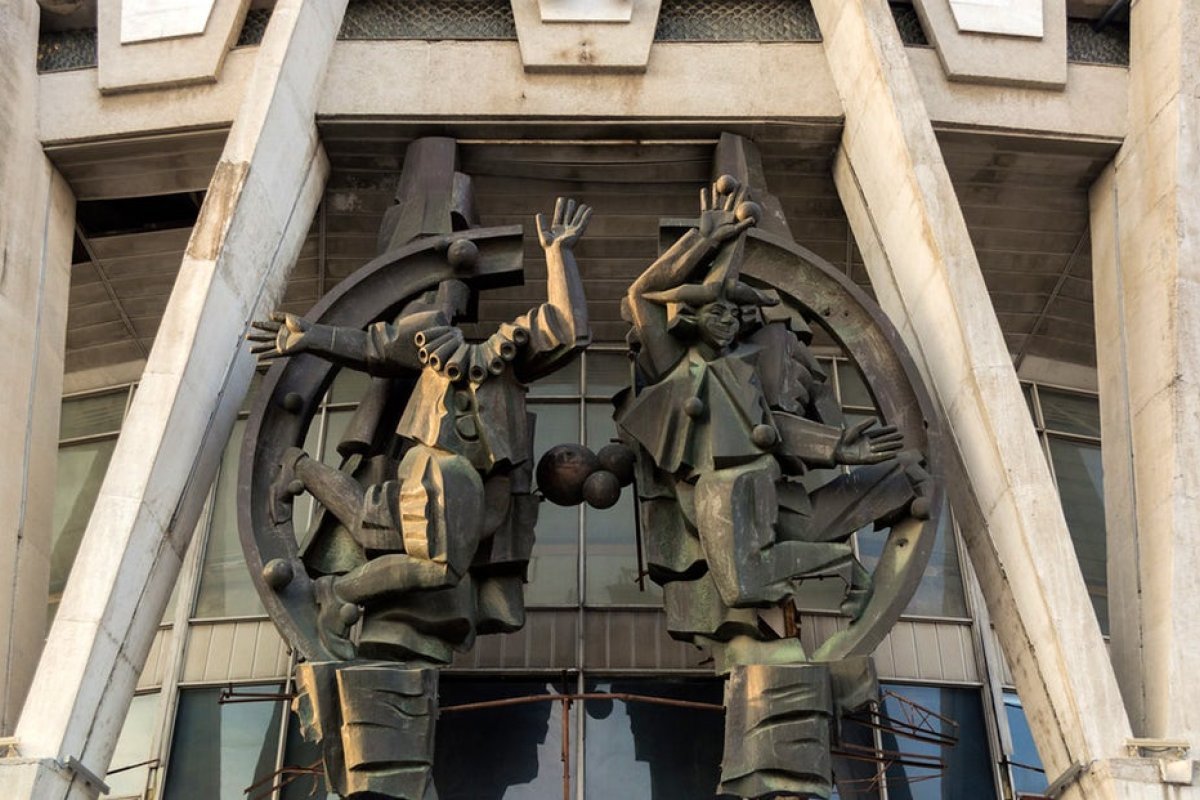
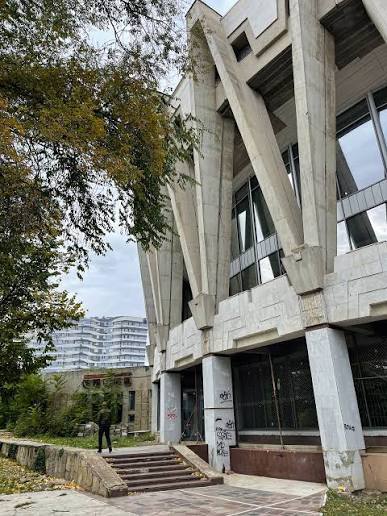
From an engineering standpoint, those V-shaped columns were no mere decoration: they were built from steel trusses clad in concrete and marble facing, carrying structural loads while producing a distinctive visual rhythm. The roof was a dome supported by radial steel beams, parts of which were reportedly designed to be detachable—a reflection of the period’s obsession with functional precision in circus performance. For nostalgia travelers, the approach to the building is itself a kind of ritual. Above the main entrance once hung a large bronze sculpture depicting two performing clowns; today the façade is mottled, marble facing has flaked away, and metal elements have corroded. Yet the contrast between rough concrete and elegant curves, heavy base and light dome, still conveys the balance late-Soviet architects sought between technical confidence and aesthetic ambition. This visual “Sovietness” is pure and unpolished—far more likely to stir the nostalgic nerve than any renovated government building.

Book a Soviet era history tour in Chisinau today
A Time Capsule Frozen Since 2004
The popularity of the Chișinău circus stems in large part from its internally “frozen” state. Unlike many Soviet buildings converted into shopping centers or luxury theaters, the circus largely retained its original large-scale spatial configuration after closing in 2004; a small-scale reopening followed, but the main amphitheater with its 1,900 seats remained long abandoned.
For participants in Soviet nostalgia tours, this dereliction is itself a precious “exhibit.” In its heyday the circus was one of Moldova’s cultural centers. Records show that in 1982 alone it staged thirty to sixty performances a month—a frequency far exceeding that of other Soviet circus buildings of the time. Acrobats, animal trainers, and clowns from many regions performed here before packed audiences of Chișinău citizens. The interior was equally ingenious: the foyer was once decorated with large encaustic murals, and side stairwells were inlaid with soft ceramic panels, details that together created an atmosphere both grand and playful.
All of this halted abruptly in 2004. Owing to a lack of maintenance funds and complications in the subsequent privatization process—a Cypriot company promised renovation but failed to fulfill its obligations—the circus sank into more than a decade of neglect. For today’s visitors, gazing at the building through a fence or on a specialized urban walking tour while a guide recounts how it fell from “one of the most beautiful buildings in the Soviet Union” to a “destroyed pearl” produces precisely the sense of vertigo that defines nostalgia tourism. It is no longer simply a venue for watching performances but a physical textbook about rise and decline, about the painful transitions of the post-Soviet era. Local guides often emphasize details of vandalism after closure—smashed windows, seats and metal fittings stripped away—a narrative that further heightens visitors’ sense of mourning for a lost civilization.
The Perfect Vehicle for Nostalgia: From Lada Tours to the Big Top
In Chișinău’s increasingly segmented tourism market, routes dedicated to Chisinau Soviet heritage are making the circus a core attraction. Search results show that multiple platforms offering “Soviet Chișinău” or “retro Lada car tours” explicitly list the State Circus as a principal stop.
One private tour by vintage Lada, for example, describes visitors stopping “outside the brutalist Chișinău State Circus and the eerie abandoned ‘National’ Hotel.” The pairing is no accident: the circus’s circular volume, its concrete and glass, and its aura of interrupted history fit neatly into an itinerary built around the aesthetic of decay and the romance of retro technology. Guides on such tours typically position the circus within a chapter on the “golden age,” alongside the nearby Komsomol youth statue and tracts of panel housing, using it to narrate the Soviet commitment to mass culture and leisure. The interpretive framework often juxtaposes the circus with topics such as state-allocated apartments and the myth of equality, turning the building into a starting point for discussing the Soviet welfare system and its internal contradictions.
What makes the circus especially effective as a nostalgia vehicle is its multisensory accessibility. Visitors do not need tickets or a performance to “experience” it; the exterior alone—the slanted columns, the weathered cladding, the empty ring visible through gaps—delivers the narrative. Photographs taken here circulate widely on social media under tags like “Soviet modernism” and “brutalism,” feeding a transnational community of architecture enthusiasts and dark-tourism aficionados. For tour operators, this means the circus can be sold as a low-cost, high-emotion stop that requires no scheduling around performances, while still delivering the authenticity that paying customers expect. The building’s uncertain restoration status only adds to its value: each season the site may look slightly different, giving repeat visitors and guides alike a sense of witnessing something transient and unrepeatable.
Why Nostalgia Tourists Keep Coming Back
The deeper reason the Chișinău State Circus resonates with Soviet nostalgia tours is that it embodies a specific emotional register: not longing for the Soviet state itself, but fascination with the scale of its promises and the abruptness of their withdrawal. The circus was designed to be a place of collective joy, engineered with genuine technical ambition and decorated with references to local culture. Its current silence is therefore experienced not as mere decay but as a kind of historical punctuation mark.
Architectural historians value it as a rare original design in a field dominated by standardized blueprints; photographers value its sculptural geometry; historians of everyday life value its evidence of state-run leisure; and ordinary travelers value the uncanny feeling of standing before a building that seems to have stopped mid-sentence. These constituencies overlap in the nostalgia tour market, where the circus functions as a shared anchor point around which different stories—architectural, political, personal—can be told. Whether the main hall is eventually restored or remains closed, its status as a landmark of Soviet memory in Chișinău seems secure, precisely because its meaning now depends less on what happens inside it than on what visitors project onto its weathered circular shell.

Book a Chisinau Soviet tour today
FAQ
What is the Chișinău State Circus and when was it built?
The Chișinău State Circus is a landmark of Soviet modernist architecture in Moldova’s capital, completed in 1981 and designed by architects Semyon Shoikhet and Ala Kirichenko. It was once considered the most comfortable circus in the Soviet Union and the fourth largest in the world.
Why is the circus popular with Soviet nostalgia tours?
Because it preserves, almost intact, the aesthetic and cultural ambitions of the late Soviet period—original socialist modernist design, evidence of state-run mass entertainment, and a semi-abandoned condition that makes the passage of history physically visible. It requires no tickets or performances to “experience,” making it an ideal stop on themed walking and vintage-car tours.
Is the circus still open for performances?
The main hall with 1,900 seats closed in 2004 and has long remained abandoned, though a smaller 300-seat hall reopened in 2014. Full restoration of the main amphitheater has depended on EU-funded projects and remains a work in progress.
Can I visit the Chișinău State Circus independently?
Yes. The exterior can be viewed freely from the street, and many visitors photograph it as part of a self-guided architecture walk. However, access to the interior is limited and depends on restoration status, so joining an organized Soviet-themed lada tour in Chisinau is the most reliable way to see it with context.
What architectural style does the building represent?
It is a prime example of Soviet late modernism with brutalist influences in Chisinau, distinguished by its circular volume, slanted V-shaped concrete columns (often interpreted as a reference to the Moldovan hora dance), and a steel-beam dome. It is frequently cited in discussions of socialist modernism and post-Soviet architectural heritage.
Where is the circus located and how do I get there?
It stands in central Chișinău within easy reach of other Soviet-era landmarks, making it convenient to combine with visits to the Komsomol youth statue, panel housing districts, and other stops on Soviet heritage itineraries. Most themed tours include transport, including vintage Lada car options.
Why do some people call it a “ruin” if it is still standing?
The structure itself is assessed as sound, but years of neglect, partial vandalism, and stalled privatization left the main hall empty and the façade weathered. This “semi-ruin” state is precisely what attracts dark-tourism and nostalgia visitors, who value authenticity over restoration.
Book a Chisinau back to the USSR tour today